
- By YANCHAO
- 2026-09-20
- Customs & Restriction
What Can You Ship from China to the USA? General, Sensitive and Prohibited Items

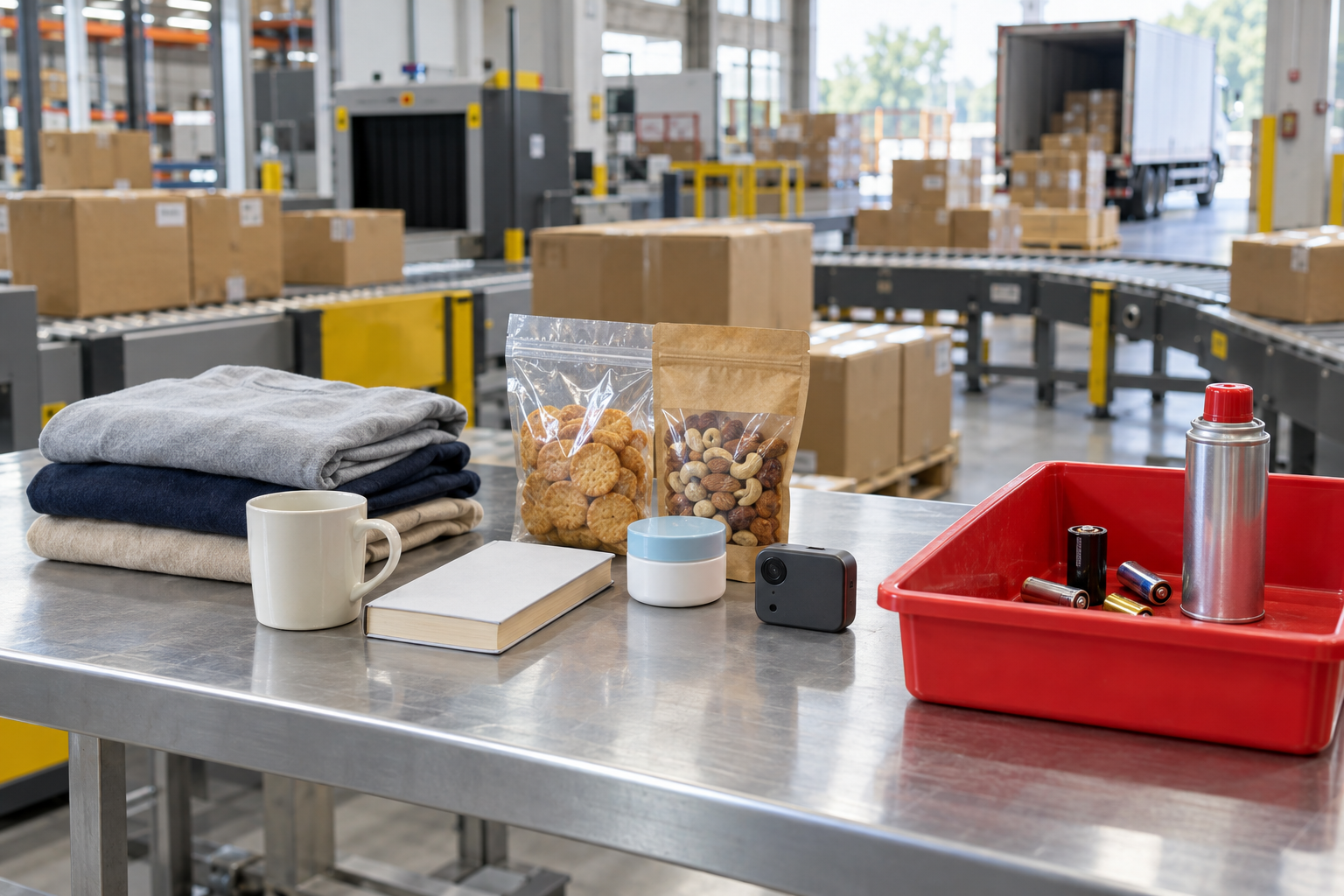
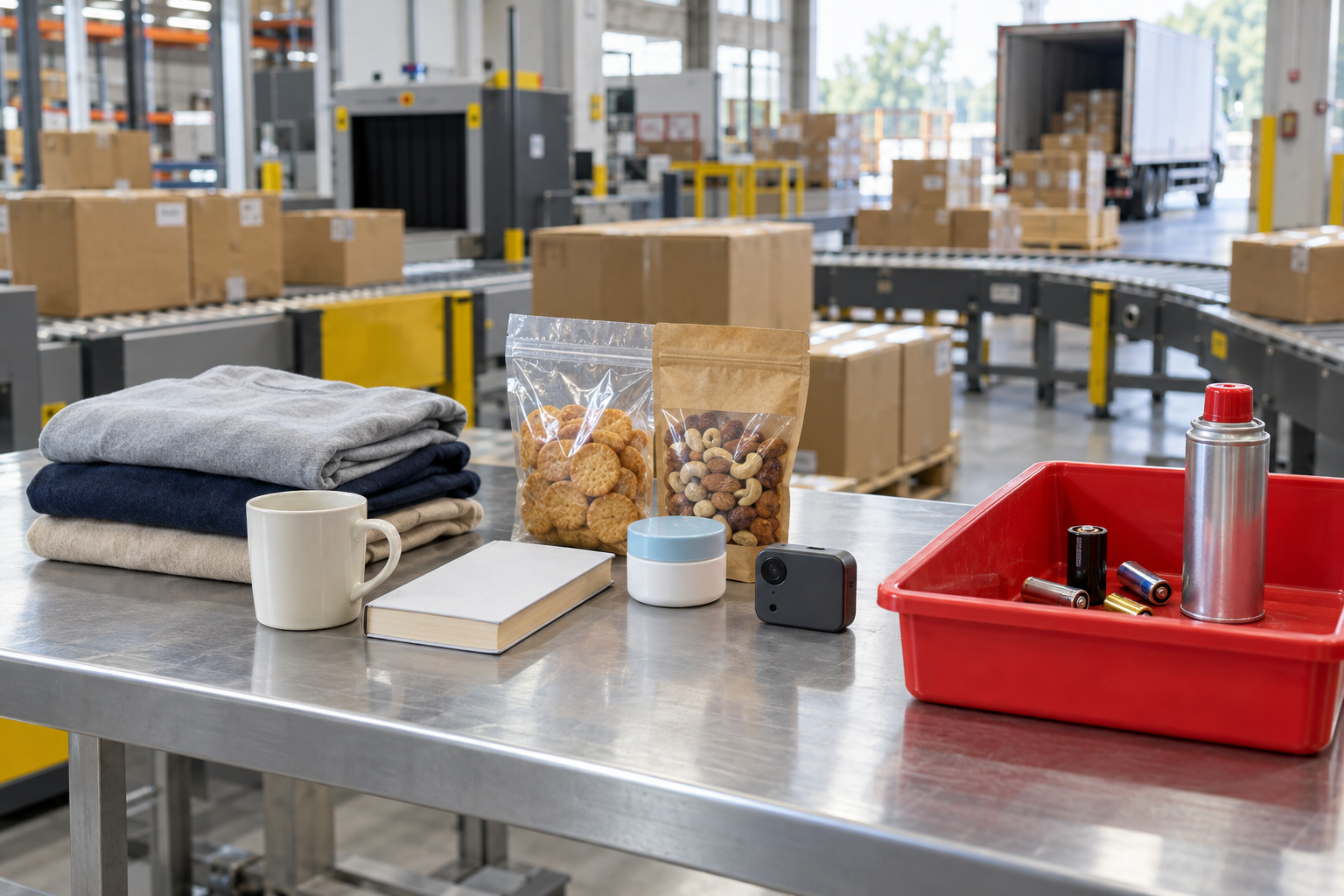
Ordinary clothing, bedding, books, kitchenware and many household goods can usually ship from China to the USA on a general-goods route. Food, cosmetics, liquids, powders and products with built-in batteries need a route that explicitly accepts that category. Loose batteries, power banks, aerosols, cigarettes, alcohol-based perfume, fresh food, live plants and counterfeit goods are among the items YANCHAO's warehouse refuses.
That first answer is useful, but it is not the whole decision. A product must pass three separate checks:
- the warehouse agrees to receive it;
- the selected carrier route accepts its cargo type; and
- the product is admissible under US federal and, where relevant, state rules.
Passing one check does not guarantee the other two.
Review date: YANCHAO's warehouse categories and US route lists on this page were checked on 20 September 2026. Route acceptance changes with operating conditions. US agencies make the final admissibility decision at the border.
Check the current eligible route
The three checks that decide whether an item can ship
The easiest mistake is to read “food” or “medicine” in a carrier table and assume every product in that category is cleared for the United States. The route label only describes what the logistics product is equipped to handle. It does not replace customs, food-safety, agricultural or drug rules.
| Check | What it answers | Typical reason for failure |
|---|---|---|
| Warehouse intake | Will the China warehouse accept and store the item? | Fire, pressure, chemical, legal or counterfeit risk |
| Route acceptance | Can this named air or sea service transport the cargo type? | The route is general goods only, or the carton exceeds its limits |
| US admissibility | May the product legally enter the United States? | FDA, USDA, CBP or another agency restricts the item or requires documents |
The US Food and Drug Administration says all products offered for entry, including personal-use products, must be declared to US Customs and Border Protection. FDA-regulated goods may be refused if they appear unsafe, unapproved, misbranded or otherwise non-compliant. CBP separately distinguishes prohibited goods, which cannot legally enter, from restricted goods, which need a licence or approval.
Quick item-by-item answer
Use this table as a screening tool, not as final clearance. “Pre-review” means the warehouse needs the exact product details before the customer buys or submits the parcel.
| Item type | Warehouse/route position | US-side issue to check | Practical answer |
|---|---|---|---|
| Clothing, bedding, towels, ordinary books | General goods | Accurate description and value | Usually suitable for a general-goods route |
| Household goods, toys, kitchenware | General goods if no battery, liquid, magnet or restricted material | Product safety and exact material | Usually suitable after ordinary inspection |
| Packaged snacks, tea and nuts | Special goods | FDA rules; USDA rules for animal or plant ingredients | Pre-review the ingredients and packaging |
| Meat, dairy or egg products | A special-sea list may name the category | USDA/FSIS restrictions and certification can apply | Do not treat as generally admissible; review each product |
| Skincare, creams and other cosmetics | Special goods | FDA labelling/safety; alcohol, aerosol and ingredient risks | Send the ingredient list, size and packaging for review |
| Liquids, pastes and powders | Special goods | Composition, volume and dangerous-goods classification | Pre-review; some formulations are refused |
| Electronic device with a built-in battery | Eligible special-goods routes | Battery specification and safe packaging | Often reviewable if the battery stays installed |
| Loose battery or power bank | Warehouse refusal list | Dangerous-goods transport rules | Do not send to the warehouse |
| Medicine or medical goods | A special route may list the category | FDA drug/device admissibility and prescription status | Route support is not approval; review documents first |
| Knife or sharp tool | Some special routes list knives | Switchblades are prohibited; state and city rules can be stricter | Exact mechanism and destination must be checked |
| Raw wood or wood product | Special-goods review | USDA APHIS plant/wood requirements | Pre-review species, treatment and construction |
| Branded fashion item | Some special routes list branded goods | Counterfeit goods are prohibited; authenticity matters | Authenticity evidence may be required; fakes are refused |
| Magnet or magnetic product | One special-sea list names magnetic goods | Strength, form and carrier safety rules | Pre-review; a route label does not override warehouse refusal rules |
| Live plant, seed or fresh produce | Warehouse refusal list | USDA permits and commodity rules | Do not submit without prior official and warehouse approval |
General goods that normally need the least intervention
General goods are ordinary products without a battery, magnet, liquid, powder, pressurised container or brand-authenticity concern. Examples include plain clothing, bedding, towels, pet accessories, jewellery, non-electronic toys, pens, ordinary books, sports accessories, furniture parts and common kitchen items.
The goods still need a specific declaration. “Clothes” is better than “personal items,” but “two cotton hoodies” is better again. CBP's e-commerce guidance favours precise product descriptions over vague labels such as “accessories,” “gift” or “online order.” Materials, quantity and intended use may matter.
For current prices and carton rules, use the China-to-USA shipping-cost guide. For a route-level time and minimum-weight comparison, see air vs sea shipping from China to the USA.
Which sensitive goods appear on current US route lists?
YANCHAO's 20 September 2026 snapshot contains three routes with broader cargo acceptance than the general-goods services.
| Route | Cargo categories listed by the route | Estimated transit |
|---|---|---|
| US promotional fast air, special goods | General goods, food, liquids/pastes, powders, built-in-battery products, cosmetics, medicines/medical goods, adult products, knives, wood, board/card games, hardware and branded fashion | 7–12 days |
| US economy air, 11 kg minimum | General goods, built-in-battery products, cosmetics, adult products, knives, wood, board/card games and hardware | 14–18 days |
| US special-goods sea, 15 kg minimum | Food, meat, general goods, liquids/pastes, medicines/medical goods, powders, cosmetics, built-in-battery products, adult products, knives, wood, board/card games, hardware and magnetic goods | 35–45 days |
All three are listed as DDP in the supplied route snapshot. Their cargo lists still require product-level screening. “Cosmetics,” for example, covers very different transport risks: a sealed non-aerosol cream is not the same as an alcohol-heavy perfume or pressurised spray.
Can you ship food from China to the USA?
Some packaged foods can be reviewed for an eligible special-goods route, but “food” is not a blanket approval. Provide the English product name, full ingredient list, manufacturer packaging, quantity, shelf life and intended personal use before shipping.
FDA states that imported food is subject to US requirements and inspection; prior notice can apply even to food sent for personal use. USDA APHIS separately restricts many meat, egg, dairy, fresh-produce, seed and other agricultural products because they can carry animal diseases or plant pests. APHIS warns that products found in US shops may still be ineligible for direct personal import through the mail.
For that reason, a snack containing meat powder, sausage, preserved egg or dairy ingredients needs a different review from biscuits or candy. YANCHAO's route table may list meat, but the US border decision belongs to the responsible US agencies.
Can you ship cosmetics, liquids or powders?
Eligible non-aerosol cosmetics, liquids, pastes and powders may use a special-goods route after the formulation and packaging are reviewed. Send clear photos of every label, the ingredient list, container size, quantity and whether the product contains alcohol or a pressurised propellant.
Do not group all beauty products under one declaration. A face cream, nail glue, loose powder, perfume and aerosol hairspray have different risks. YANCHAO's current refusal list includes alcohol-based perfume, hairspray and other pressurised or flammable products. Leakage-resistant retail packaging does not make a prohibited formulation acceptable.
Can you ship electronics and batteries?
A device with a battery installed inside it may qualify for an eligible built-in-battery route after review. Loose batteries, power banks, outdoor power stations and automotive batteries are on YANCHAO's warehouse refusal list and should not be sent to the warehouse.
Before buying, provide the product name, battery chemistry, watt-hours if available, number of units and confirmation that the battery is installed in the device. “Phone accessory” is too broad: a plastic phone case is general goods, Bluetooth earphones contain batteries, and a power bank is refused.
Can you ship medicine or medical products?
A carrier route that lists medicine or medical goods only confirms a transport category. It does not mean the drug or device is approved for personal import into the United States. FDA reviews imported drugs and can refuse products that appear unapproved, unsafe, adulterated or misbranded.
YANCHAO also refuses narcotic and psychotropic drugs. Customers should provide the exact product, active ingredient, dosage form, quantity, original packaging, prescription status and intended use. FDA's personal-import guidance contains limited circumstances and documentation expectations; it is not a general exemption for buying foreign medicine online.
Knives, wood, magnets and branded goods need exact details
These four categories are too broad for a yes/no answer.
- Knives: some routes list knives, but CBP says switchblades and some spring-loaded knives are prohibited. State and city possession rules may be stricter than federal import treatment.
- Wood: finished, treated goods may differ from raw wood, bark, plant material or soil. USDA APHIS directs importers to check the exact commodity and country of origin.
- Magnets: the special-sea route lists magnetic goods, while loose or strong magnets may still fail warehouse or carrier safety checks. Provide dimensions, quantity and magnetic strength or product specification.
- Branded goods: authentic products and counterfeit products are not the same category. YANCHAO refuses counterfeit goods, and customers should keep purchase receipts or authenticity evidence when a branded item is reviewed.
What the warehouse will not accept
The following list combines the main high-risk categories in YANCHAO's current warehouse rules. It is not a complete list of everything prohibited by Chinese or US law.
- firearms, ammunition, fireworks and matches;
- petrol, kerosene, canned gas, paint and other flammable or toxic chemicals;
- loose batteries, power banks, outdoor power stations and car batteries;
- pressurised sprays, alcohol-based perfume and other high-risk aerosols;
- cigarettes and e-cigarettes;
- narcotic or psychotropic drugs;
- fresh food, live plants, live animals and seeds;
- counterfeit goods and certain luxury goods requiring additional review;
- currency, precious metals and certain data-storage devices;
- unidentified white powders, self-heating products and other undeclared hazardous goods.
Never hide a sensitive product inside a general-goods parcel or use a false description. A cheaper general-goods quote is not valid if the contents require a special route.
A product-review checklist to use before purchase
Send one complete item record rather than a screenshot showing only the shopping title.
- Exact English and Chinese product name
- Product link and clear photos of all labels
- Brand and proof of purchase where relevant
- Ingredients or material composition
- Liquid volume, powder weight or food quantity
- Battery chemistry, watt-hours and whether it is built in
- Number of units and intended personal use
- Retail packaging and whether the container is aerosol or pressurised
- Destination state and ZIP code
- Any prescription, permit or supporting document required by the product
This information lets the warehouse screen the item before it creates avoidable domestic shipping, return or disposal costs.
A real route record—and what it does not prove
An anonymised YANCHAO parcel using the US promotional fast-air special-goods route left the warehouse for Costa Mesa, California, on 13 August 2026 and was confirmed received on 26 August 2026. Its final chargeable weight was 1.44 kg.
The record shows that the named special-goods route operated and completed that shipment. It does not prove that every food, cosmetic, medicine or battery product will be accepted. The actual contents were not supplied for publication, so this article does not use the case as evidence for a particular product category.
Frequently asked questions
Can I ship snacks from China to the USA?
Some sealed, packaged snacks may be reviewed for a special-goods route. Provide the full ingredient list and packaging first. Meat, egg, dairy, fresh-produce and plant ingredients can trigger USDA or FDA requirements, so a route that accepts “food” does not guarantee US entry.
Can I ship skincare products from China to the USA?
Some creams and non-aerosol skincare products may qualify for an eligible special-goods route after ingredient, container and quantity review. Alcohol-based perfume, hairspray and other pressurised or flammable products are refused by YANCHAO's warehouse.
Can I ship a phone or laptop from China to the USA?
An electronic device with its battery installed may be reviewable on a built-in-battery route. YANCHAO's current warehouse rules refuse loose batteries, power banks and certain data-storage devices, so send the exact model and battery specification before purchase or warehouse delivery.
Can I ship Chinese medicine to the USA?
Do not rely on the route's “medicine” label alone. FDA rules, active ingredients, prescription status and controlled-substance restrictions still apply. Provide the original packaging, ingredient list, dosage form, quantity and supporting medical documents for review.
Are branded products allowed?
Authentic branded products may require a special route and proof of purchase. Counterfeit goods are refused. The customer should provide the brand, product link, quantity and receipt before the item reaches the warehouse.
Sources and review date
- YANCHAO warehouse cargo-classification and refusal rules, reviewed 20 September 2026.
- YANCHAO US route cargo lists and estimated transit times, supplied and reviewed 20 September 2026.
- US Customs and Border Protection: Prohibited and Restricted Items, published 30 March 2026.
- US Customs and Border Protection: Acceptable and Unacceptable Cargo Descriptions, checked 20 September 2026.
- US Food and Drug Administration: Import Basics, checked 20 September 2026.
- US Food and Drug Administration: Personal Importation, checked 20 September 2026.
- US Food and Drug Administration: Importing Food Products into the United States, checked 20 September 2026.
- USDA APHIS: Shipping Plants, Food and Other Agricultural Items via Express Courier, last modified 25 January 2026.
- USDA APHIS: How to Import Plants and Plant Products, last modified 29 July 2026.

About the author
YANCHAO Team
Cross-Border Shipping Experts
This article is brought to you by the YANCHAO team - the people behind our self-developed warehouse platform and 5,000 m2 Huizhou facility. We help over 5 million international students and overseas shoppers ship safely and affordably from China to 100+ countries.
More about YANCHAO