
- By YANCHAO
- 2026-11-05
- Shipping & Logistics
Shipping Household Essentials to Australia for International Students: Air, Sea, Packing and Biosecurity

International students should carry documents and first-week essentials, use air freight for eligible goods needed soon, and compare sea freight for non-urgent cartons from 12 kg. Confirm the cargo type, final packed weight, postcode and accommodation access before dispatch.
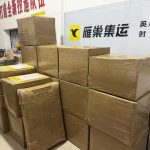
This guide focuses on practical household essentials—clothes, shoes, bed linen and cosmetics—rather than treating a student move as one undifferentiated box. It also uses a completed YANCHAO shipment to Melbourne to show why final packed volume can matter more than the weight shown before consolidation.
What should an international student carry, ship by air or send by sea?
Keep irreplaceable and immediately needed items with you. Air freight is better suited to eligible goods required soon after arrival, while the current Australia sea option is worth reviewing for non-urgent cartons from 12 kg. The final decision must use the packed weight, cargo type, postcode, delivery deadline and accommodation access—not the shopping-cart weight alone.
| Item or situation | Practical starting choice | Why |
|---|---|---|
| Passport, enrolment papers, laptop needed on arrival, essential medication | Carry with the passenger | These items are difficult or risky to replace if delayed; medicines also have separate import requirements. |
| First-week clothes and one basic bedding set | Accompanied baggage | The student can move into the room before an international parcel arrives. |
| Additional clean clothes, shoes, sheets and ordinary household textiles | Standard air or qualifying sea freight | Choose by deadline, final chargeable weight and postcode. |
| Commercially packaged cosmetics and skincare | Special-cargo route review | Product type, ingredients, quantity, packaging and leakage risk must be checked before dispatch. |
| Bulky, non-urgent bedding or multiple seller orders | Sea freight review from 12 kg | Sea can suit planned, heavier cartons, but it has a longer delivery window. |
| Food, plant material, animal-derived goods, wooden items or used outdoor equipment | Item-level biosecurity check before purchase or dispatch | Carrier acceptance does not replace Australian biosecurity permission. |
Which student household items are the simplest to ship?
Clean, accurately declared clothes, ordinary shoes and non-feather bed linen are usually the simplest items in a student household shipment. Cosmetics require a special-cargo review, while down-filled bedding, food, wood, animal products and anything exposed to soil or rural environments need closer screening under Australian biosecurity rules.
Clothes
Ordinary clothing should be clean, dry and described precisely—for example, “three cotton T-shirts” rather than “personal items.” Clothing previously used on farms, around animals or in rural environments must be thoroughly cleaned and declared where required. Australia’s Department of Agriculture, Fisheries and Forestry (DAFF) specifically warns that clothing and equipment exposed to rural or animal environments can carry biosecurity risk.
Shoes
Shoes should have clean soles with no soil, seeds or plant debris. Pack visibly clean footwear together so an inspection does not require officers to search through unrelated goods. Used hiking boots, sports shoes and other footwear exposed outdoors deserve a stricter check than new indoor shoes.
Bed sheets, pillowcases and other bedding
Ordinary bed linen is generally easier to assess than filled bedding. Down jackets, sleeping bags, pillows and quilts contain feathers and therefore fall under a specific DAFF category. Current DAFF guidance allows manufactured feather articles for personal use under stated conditions, with a limit of up to ten feather articles; the exact item should still be checked before shipping.
Cosmetics and skincare
Do not classify all beauty products as ordinary cargo. DAFF currently states that commercially manufactured and packaged cosmetics for personal use may be brought or mailed to Australia up to 10 kg or 10 litres, but the route still needs to accept the exact product. Provide the product name, ingredients or product page, container size, quantity and packaging information. Perfume, aerosols and pressurised products should not be assumed to follow the same rules as face cream or cleanser.
What are the current YANCHAO options for student household goods to Australia?
As checked in YANCHAO’s live calculator on 5 November 2026, standard general-goods air and standard special-cargo air each list 7–12 days, while the postcode-based sea service starts at 12 kg and lists 30–45 days. These are estimated transit windows, not guaranteed delivery dates. Eligibility and the payable quote still depend on the goods, final carton measurements, postcode and active checkout conditions.
| Route | Suitable starting point | Current estimated transit | Important condition |
|---|---|---|---|
| Australia general-goods air, standard | Eligible clothes, clean shoes, sheets and ordinary household goods | 7–12 days | The parcel must contain general goods only. |
| Australia special-cargo air, standard | Eligible cosmetics and mixed cartons requiring special review | 7–12 days | Every special attribute must be declared before route approval. |
| Australia sea freight from 12 kg | Heavier, non-urgent eligible cartons | 30–45 days | Pricing and availability vary by postcode zone; remote-area fees may apply. |
YANCHAO’s current operational information describes these air and sea options as DDP door-to-door services. This does not mean every Australian postcode or every product is automatically accepted. A remote postcode may attract an extra charge, and the last-mile carrier still needs a deliverable address and access to the building.
How should a student plan delivery to a dormitory or apartment?
A dormitory or apartment can receive a shipment only if its reception, parcel room or carrier-access rules allow it. Before dispatch, ask the accommodation whether it accepts large international cartons, which recipient name must appear on the label, whether a room or unit number is required, and how the driver can enter the building.
Use this address checklist:
- Confirm the full Australian postcode and whether the address is in a remote-service area.
- Use the student’s legal or registered accommodation name consistently.
- Include the unit, room or building number where applicable.
- Provide a reachable Australian mobile number.
- Ask whether reception signs for parcels and whether there is a carton size or storage limit.
- Supply gate, intercom or delivery instructions before the last-mile handoff.
- Avoid dispatching a large carton before the accommodation has confirmed the move-in date and acceptance policy.
If building access is restricted, door-to-door service may reach the address but still fail at the final handoff. Redelivery, collection or address-correction costs should therefore be checked before shipment.
How can consolidation reduce chargeable weight?
Consolidation can remove redundant seller cartons and combine several domestic orders, but it does not guarantee a lighter bill. International freight commonly compares actual and volumetric weight, so soft but bulky goods such as jackets, quilts and pillows can still be charged above their scale weight. Protection cannot be removed simply to chase the smallest box.
YANCHAO currently provides free warehouse receiving photos, visual inspection and consolidation, and can provide a packing video. Vacuum compression is an optional paid service at CNY 20 per order. The current free-storage period is being updated, so customers should confirm the applicable storage allowance with support before sending parcels to the warehouse.
For a student shipment, a sensible packing request is:
- Separate ordinary goods from cosmetics and any other special cargo.
- Remove unnecessary domestic seller packaging where safe.
- Use vacuum compression only for suitable textiles; do not compress fragile, structured or moisture-sensitive goods.
- Keep cosmetics sealed and add leak protection.
- Request protective packing for shoes and breakable household items.
- Review the final actual weight, volumetric weight and chargeable weight before approving dispatch.
Real Melbourne shipment: clothes, cosmetics, shoes and bed sheets
This first-party YANCHAO order record shows how a large group of domestic parcels changed after warehouse packing. It is one completed shipment, not a promise of the same reduction, price or delivery time for another student.
| Field | Recorded result |
|---|---|
| Destination | Melbourne, Victoria, Australia |
| Goods | Clothes, cosmetics, shoes and bed sheets |
| Route | Australia Special-Cargo Air Line, Standard |
| Warehouse dispatch | 1 September 2026, 15:24:29 |
| Confirmed receipt | 16 September 2026, 16:40:47 |
| Actual weight | 104.310 kg before packing → 29.160 kg after packing |
| Volumetric weight | 163.312 kg before packing → 39.606 kg after packing |
| Chargeable weight | 163.312 kg before packing → 39.606 kg after packing |
| Chargeable-weight reduction | 123.706 kg, approximately 75.7% |
The parcel was delivered about 15 days after warehouse dispatch. After packing, volumetric weight remained higher than actual weight, so the recorded final chargeable weight was 39.606 kg rather than 29.160 kg. The result shows why a student should wait for finished carton measurements before comparing routes or judging the final cost.
Recorded payment breakdown
| Charge or adjustment | Amount |
|---|---|
| Freight shown on the order | CNY 4,413 |
| Insurance | CNY 75 |
| Value-added service | CNY 2 |
| Confirmed-receipt coupon | −CNY 10 |
| Amount initially paid | CNY 4,480 |
| Refund recorded after packing | −CNY 1,160 |
| Final amount paid | CNY 3,320 |
The CNY 3,320 figure is a historical result for this specific shipment. It must not be used as a current quote for another parcel because route pricing, dimensions, postcode, goods, insurance and optional services can differ.
What does Australian biosecurity require students to check?
Australia screens mailed and freighted goods for food, plant and animal risks. International students should check the exact product before buying or shipping it, describe every item accurately, and clean footwear or equipment that may carry soil or organic material. If a product is not clearly covered by DAFF’s public guidance, use the Biosecurity Import Conditions system (BICON) or contact the relevant authority before dispatch.
Two distinctions matter:
- Carrier acceptance is not import approval. A special-cargo line may be able to transport cosmetics, but Australian authorities decide whether the goods may enter.
- New purchases are not automatically unaccompanied personal effects. The Australian Border Force defines unaccompanied personal effects around goods connected to the owner’s travel and eligibility conditions. Newly purchased goods sent after arrival may need to be handled under ordinary import rules instead.
Official references:
- DAFF: Studying in Australia
- DAFF: Bringing or mailing goods to Australia
- DAFF: Sending or ordering goods online from outside Australia
- Australian Border Force: Unaccompanied Personal Effects
A practical shipping timeline before semester starts
Work backwards from the date on which the accommodation can actually receive the parcel. For a non-urgent 12 kg+ sea carton, allow for the current 30–45 day route estimate plus warehouse receiving, consolidation, measurement and possible inspection time. For eligible air cargo, use the current 7–12 day estimate but still leave a buffer for route review, customs, biosecurity and last-mile access.
A safe planning sequence is:
- Build an item list before ordering from Chinese sellers.
- Mark each item as general goods, special cargo or requiring biosecurity review.
- Send domestic orders to the assigned warehouse address.
- Review arrival photos and remove unsuitable items before consolidation.
- Confirm the Australian address, postcode and move-in date.
- Compare eligible air and sea routes after final packing measurements are available.
- Approve dispatch only when the accommodation can accept delivery.
Common mistakes to avoid
- Sending every item by air because the shopping-cart weight looks small.
- Choosing sea freight before confirming that the finished carton meets the minimum weight and postcode coverage.
- Describing a mixed carton as “clothes” when it also contains cosmetics, liquid, powder, batteries or food.
- Packing shoes with visible soil or plant material.
- Treating down-filled bedding as ordinary fabric without checking the feather-product conditions.
- Using a dormitory address without the room number, recipient format or reception approval.
- Assuming “door to door” removes remote-area, access or redelivery charges.
- Treating a historical paid amount as a fixed rate for a new shipment.
Frequently asked questions
Can international students ship clothes, shoes and bed sheets from China to Australia?
Yes, eligible clothes, clean shoes and ordinary bed linen can be reviewed for Australia air or sea freight. They must be accurately declared, and shoes or used goods must be clean and free from soil, seeds and other biosecurity contamination. Filled bedding and animal-derived materials require additional checks.
Can students ship cosmetics to Australia?
Commercially manufactured and packaged cosmetics for personal use may be permitted under current DAFF conditions, but the exact product and route must be checked. YANCHAO requires cosmetics to be declared as special cargo rather than hidden inside a general-goods carton.
Is air or sea freight better for student household items?
Air freight is the practical starting point for eligible goods needed soon. Sea freight is worth reviewing for non-urgent cartons that meet the 12 kg threshold. Compare only after consolidation, when the final chargeable weight, postcode, cargo type and delivery deadline are known.
How long does student shipping to Australia take?
On 5 November 2026, YANCHAO’s calculator listed 7–12 days for standard Australia general-goods air, 7–12 days for standard special-cargo air, and 30–45 days for the postcode-based sea service from 12 kg. These are estimates and can change with the route and shipment conditions.
Can YANCHAO deliver to an Australian university dormitory or apartment?
Delivery depends on the building’s access and parcel-reception rules. Confirm the recipient format, room or unit number, Australian phone number, reception policy and gate instructions before dispatch. Remote postcodes may incur an additional fee.
Related YANCHAO guides
- Student Shipping from China to Australia: Air vs Sea, Cost & Customs
- Shipping Luggage to Australia by Sea: Customs and Biosecurity Checklist
- Shipping Taobao and JD Purchases to Australia: Customs and DAFF Guide
- YANCHAO Shipping Calculator
Source note: Route details were checked in the YANCHAO shipping calculator on 5 November 2026. The Melbourne shipment figures and service details are based on YANCHAO operational records supplied for this article. Australian import guidance was reviewed against DAFF and Australian Border Force pages on the same date.
Author: YANCHAO Content Team
Reviewed by: YANCHAO Operations
Last reviewed: 5 November 2026

About the author
YANCHAO Team
Cross-Border Shipping Experts
This article is brought to you by the YANCHAO team - the people behind our self-developed warehouse platform and 5,000 m2 Huizhou facility. We help over 5 million international students and overseas shoppers ship safely and affordably from China to 100+ countries.
More about YANCHAO