
- By YANCHAO
- 2026-09-14
- Logistics News
Taobao Shipping to New Zealand: Compare Options

Taobao Shipping to New Zealand: Compare Options
When Taobao shipping to New Zealand looks more expensive than the products, switching to a buying or consolidation agent can help, but it does not guarantee a lower delivered cost. Direct delivery, official consolidation, and a third-party China warehouse use different acceptance rules, packing controls, chargeable-weight methods, customs scopes, and final-delivery arrangements. Sea service may suit some ordinary, bulky shipments, but availability must be confirmed for the actual goods, volume, postcode, and shipping date.
Key takeaways:
- Compare complete delivery scopes using the same final carton data.
- Confirm sea-service availability instead of assuming it is always offered.
- Pre-screen batteries, liquids, food, cosmetics, powders, and other sensitive goods.
- Preserve marketplace GST records and separate tax from logistics charges.
Compare direct, official and third-party flows
Taobao direct delivery offers a shorter purchasing workflow. Eligibility and price are generally shown for the order, address, and products supported at that moment. The convenience can be valuable for a simple order, but the buyer may have limited control over consolidation, repacking, measurement, or the route selected behind the checkout option.
Official consolidation usually sends domestic parcels to a designated warehouse before the buyer combines eligible items and pays the international charge. Review the current free-storage period, warehouse acceptance list, prohibited-goods rules, consolidation window, chargeable-weight formula, split options, and after-sales process. An item accepted by a Chinese domestic courier can still be rejected for international forwarding.
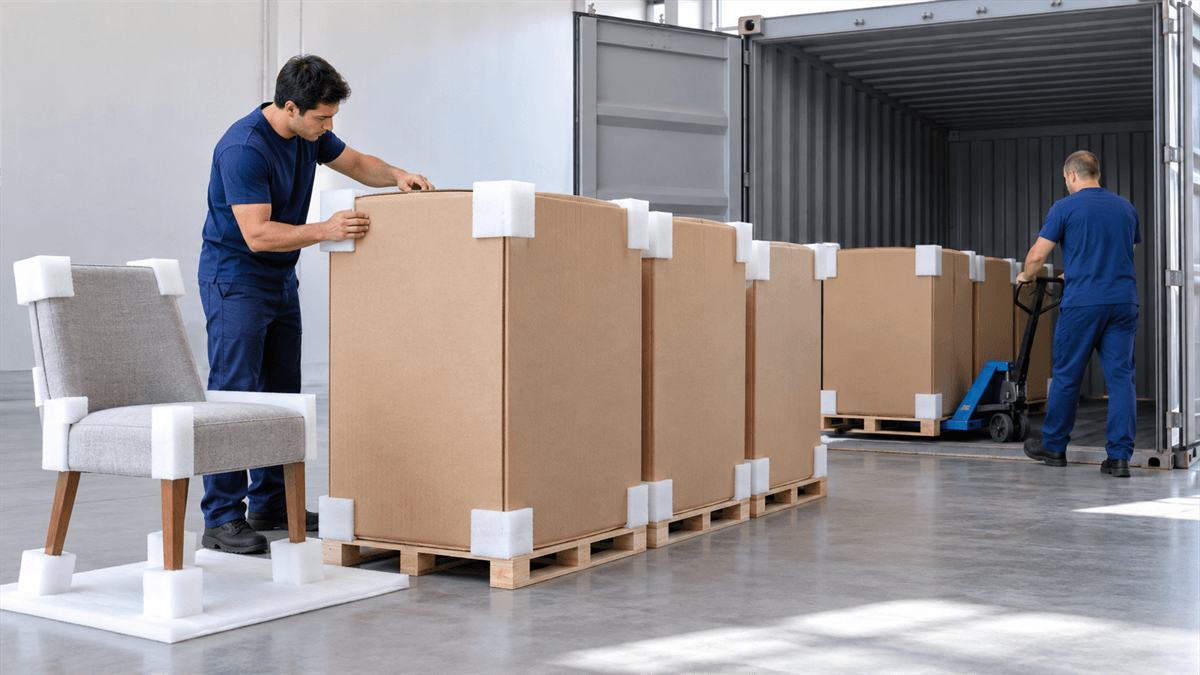
A third-party China warehouse can receive parcels from multiple marketplaces or suppliers. The buyer may request receipt photographs, quantity checks, removal of redundant courier packaging, fragile-item reinforcement, carton splitting, and final measurements. This flexibility adds receiving, handling, packaging, domestic transfer, and possible storage costs, all of which belong in the comparison.
Map the physical and contractual flow for each option. Identify who receives the supplier parcels, when custody transfers, when international freight is purchased, who prepares the commercial information, who communicates with customs, and who completes delivery in New Zealand. A low warehouse-to-airport or warehouse-to-depot number is not comparable with a delivered service.
Ask every provider to quote the same New Zealand city, postcode, residential or commercial address type, product list, values, carton assumptions, and requested service. Mark pickup, China warehouse work, export handling, international transport, clearance service, government charges, destination handling, remote-area charges, and last-mile delivery as included, excluded, conditional, or unavailable.
The return plan should be decided before purchase. If a parcel reaches the China warehouse and cannot be forwarded, determine who requests a seller return, which deadline applies, and who pays domestic freight and service fees. Cheap goods can become expensive when a rejected parcel waits beyond the marketplace return window.
YANCHAO can receive parcels in China, provide warehouse evidence, consolidate or reinforce with authorization, and use actual shipment data to check currently available options. Acceptance, price, route, and transit estimate require a review of the real goods, final package, destination, and current operating conditions. An old customer example is not a live quotation.
Confirm sea freight with final shipment data
Sea freight is often considered for bulky ordinary goods with a flexible arrival window. It should not be treated as a permanent checkout feature or the cheapest answer for every parcel. Service availability can depend on minimum charge, shipment volume, cargo type, consolidation schedule, destination coverage, and local delivery constraints.
Ask where the service begins and ends. Warehouse-to-warehouse, warehouse-to-depot, port-to-port, and delivered services place very different work and cost on the receiver. Confirm origin handling, departure schedule, estimated time basis, customs-clearance service, destination handling, deconsolidation, storage, appointment, residential delivery, remote areas, and oversized pieces.
Time estimates need a common clock. A provider may count from vessel departure while the buyer thinks the clock starts when the seller dispatches. Add domestic seller delivery, warehouse waiting, consolidation, export processing, sailing, border handling, deconsolidation, and last mile. Weather, inspection, capacity, and operational changes can affect each stage, so an estimate is not a guaranteed arrival date.
Use final packed dimensions and gross weight. Product-page net weight omits retail boxes, courier cartons, protection, and void space. Soft goods might be compressed if the buyer permits it. Ceramics or electronics may need added protection. Long sides, irregular shapes, minimums, and rounding can change the billable result.
Compare configurations as well as modes. One large consolidated carton may reduce repeated minimums but trigger an oversize rule. Two balanced cartons may cost less or survive handling better. Ask the warehouse to report the proposed carton count, dimensions, gross weight, protection method, and chargeable calculation before dispatch.
Small shipments deserve special caution. Origin and destination fixed charges can make a low per-unit sea rate misleading. A different compliant service can have a higher transport rate but lower handling or a clearer delivered total. Compare the full amount and receiver effort, not only the international segment.
Do not commit to sea freight before all goods pass acceptance review. If one restricted product forces the shipment onto a different service or must be removed, the carton plan and price will change. Keep quotes provisional until the goods list and final packing are confirmed.
Screen ordinary and sensitive goods separately
Ordinary clothing and non-powered household products are often easier to place, but material, brand, intended use, and biosecurity relevance still matter. A product title such as “accessory” is not enough for reliable acceptance or customs information. Provide a specific name and function.
Products with installed batteries, loose batteries, power banks, liquids, creams, powders, foods, supplements, medicines, cosmetics, aerosols, magnets, seeds, untreated wood, animal products, and some branded goods may need documents, special packing, a specific service, or regulatory clearance. Some may be unavailable for forwarding. The result is shipment-specific.
For battery products, provide the device name, battery chemistry, cell or battery count, watt-hour rating, whether installed or loose, and packaging photographs. For liquids and cosmetics, provide composition, capacity, container type, safety information when available, and intended use. For food or biological material, check New Zealand border and biosecurity requirements before purchase.
Never conceal a sensitive product or rename it as an ordinary item. Incorrect information can lead to refusal, delay, return, seizure, disposal, extra fees, or loss of claim eligibility. Consolidating a restricted product with ordinary clothing does not remove its properties; it can make the whole carton subject to additional review.
Ask for a written pre-screening result before ordering, then repeat the check if the seller substitutes a model, size, formulation, battery, or packaging. A domestic tracking number only proves that a Chinese carrier accepted a parcel for domestic movement. It says nothing about international carriage or New Zealand entry.
Packaging controls should reflect product risk. Liquids need leakage protection approved for the service. Fragile items need internal restraint and separation. Batteries must not move loosely or expose terminals. Food packaging and labeling need to remain identifiable. The warehouse should not remove information essential to safety, customs, warranty, or border inspection.
Maintain a manifest that maps every product to its order, quantity, value, material, sensitive attributes, and final carton. This helps the logistics provider review acceptance and helps the buyer answer document requests. It also prevents an unidentified free sample from changing the shipment’s compliance profile.
Understand New Zealand GST and import boundaries
New Zealand’s standard goods and services tax rate is 15 percent. Inland Revenue explains that qualifying overseas suppliers, online marketplaces, and re-deliverers can have GST obligations for low-value imported goods, generally goods individually valued at NZD 1,000 or less. How GST is collected depends on the transaction, supplier or platform role, value, and applicable rules.
Check the Taobao order confirmation and invoice to see whether a tax amount was collected and how it is described. Preserve the invoice, payment record, product values, and any tax evidence. Give accurate information to the forwarding and clearance parties. A buyer should not assume that a vague “tax included” label covers every government or service charge.
Marketplace collection and border processing are related but not interchangeable records. Goods can still require accurate customs information, and other charges or procedures may apply depending on value, classification, shipment structure, or regulated status. Higher-value items and special goods deserve advice from the competent New Zealand authority or a qualified customs professional.
Avoid splitting or misvaluing goods to seek a tax outcome. Commercial invoices and declarations should reflect the real transaction. False values can create enforcement, delay, insurance, and claim problems. If several purchases are consolidated, provide the warehouse with every order invoice rather than a guessed carton total.
Build a landed-cost table with product price, tax already collected by the marketplace, China domestic shipping, warehouse receiving, storage, packing, international freight, clearance service, estimated government charges not already collected, destination handling, last-mile delivery, insurance, and conditional costs. This reveals both double counting and missing responsibilities.
If a quote claims to include GST or duties, ask which party remits them, what transaction value and classification were used, what proof the receiver receives, and what happens if customs assesses a different amount. Keep an estimated tax line separate until the legal and commercial basis is clear.
Official requirements can change. For the final transaction, consult New Zealand Inland Revenue for GST rules and New Zealand Customs or other competent agencies for import and border requirements. The logistics provider can explain its operating process but should not replace authoritative tax or legal advice.
Decision table and dispatch checklist
| Factor | Taobao direct | Official consolidation | Third-party warehouse |
|---|---|---|---|
| Purchase flow | Shortest | Platform warehouse step | Separate warehouse account and address |
| Consolidation control | Limited | Platform-defined | Buyer-authorized repacking and splitting |
| Goods acceptance | Shown for supported order | Official warehouse rules | Service-specific pre-screening |
| Measurement visibility | Varies | Platform process | Final warehouse report can be requested |
| Added fees | Checkout and exceptions | Warehouse and international rules | Receiving, packing, storage, and freight |
| Best use | Simple eligible order | Eligible Taobao orders | Multiple sources or detailed packing control |
Before buying, create a product list with links, precise names, materials, intended use, quantity, unit value, and sensitive attributes. Ask sellers for expected packed dimensions and gross weight. Pre-screen the products with each forwarding option, especially anything powered, edible, liquid, powdered, cosmetic, wooden, biological, magnetic, or branded.
Before sending to a warehouse, confirm the correct recipient identifier and address format, free-storage period, return support, photo or inspection options, repacking permissions, insurance, and prohibited-goods policy. Give the warehouse an expected-parcel list so that unidentified deliveries are not consolidated accidentally.
After receipt, reconcile parcel count and product quantity. Review photographs and exceptions. Approve the packaging plan, preserve required retail or safety packaging, and obtain final carton dimensions and weights. Then request a final quote with validity, chargeable-weight calculation, complete scope, tax boundary, destination, and estimated time basis.
Before dispatch, verify the goods description, values, invoice set, receiver details, service acceptance, packaging, number of cartons, tracking or handover record, insurance choice, and exception contact. Do not authorize shipment while a restricted item or fee boundary remains unresolved.
Set an arrival cutoff for supplier parcels. Decide whether late goods will be returned, held, or shipped separately. This prevents a small delayed item from creating storage costs or causing the complete order to miss its target date.
Frequently asked questions:
Is official Taobao consolidation always cheaper than a third-party warehouse? No. Compare final chargeable weight, all warehouse fees, the international segment, tax boundaries, and last-mile delivery.
Is sea freight always available to New Zealand? No. Availability depends on the goods, volume, postcode, service conditions, and date. Confirm after screening and final measurement.
If the platform collected GST, will there be no charge at arrival? Not necessarily. Preserve the tax record and check the actual value, classification, shipment, and border treatment with authoritative guidance.
Official resources and recordkeeping
Use New Zealand Inland Revenue guidance for the current GST rate and rules on low-value imported goods. Use New Zealand Customs and the relevant biosecurity or product regulator for current entry requirements. Use the live Taobao order and consolidation pages for platform eligibility, pricing, and warehouse rules, because displayed options can change by product and address.
Keep a shipment folder containing order confirmations, invoices, marketplace tax records, seller messages, product specifications, acceptance decisions, warehouse receipts, photographs, count records, final measurements, packing approval, quotation, commercial information, handover, tracking, and delivery evidence. Record the date on every policy or quotation check.
For repeat orders, compare estimates with the final invoice and delivery outcome. Update product dimensions, packing rules, actual warehouse days, exception fees, and transit stages. Reliable historical data can improve the next decision, but it still does not replace a current acceptance check or quotation.
The right option is the one that carries the accurately described goods through an available compliant service at a clear total cost. A cheaper headline rate is not a saving when it excludes the warehouse work, tax boundary, destination charges, or return plan that the shipment actually needs.

About the author
YANCHAO Team
Cross-Border Shipping Experts
This article is brought to you by the YANCHAO team - the people behind our self-developed warehouse platform and 5,000 m2 Huizhou facility. We help over 5 million international students and overseas shoppers ship safely and affordably from China to 100+ countries.
More about YANCHAO