
- By YANCHAO
- 2026-09-11
- Logistics News
Shipping Snacks and Cosmetics from China to France: A Cost-Smart Consolidation Guide

Screen every item before comparing freight. Eligible snacks and cosmetics may fit a Europe special-goods air route with an 8–15 day estimate, but carrier acceptance is not French import permission; meat, dairy, perfume and aerosols need separate review.
Source and identity note: This first-party guide is published by YANCHAO. It is not an independent carrier ranking. External customs and food rules were checked on 11 September 2026; the current French and EU rules and the route terms shown at checkout remain controlling.
What is the most cost-effective way to ship snacks and cosmetics to France?
The useful comparison is not one advertised rate. Price the same shopping list in three ways: one mixed special-goods parcel, separate general- and sensitive-goods parcels, and one parcel after removing items that are costly or uncertain to import. Splitting can duplicate first-weight charges; mixing one sensitive item with general goods can move the entire carton onto a special-goods route.
Before requesting a quote, confirm five inputs:
- the exact name, purpose and ingredients of every product;
- the capacity, quantity and physical format—solid, liquid, cream, powder or alcohol-based;
- whether the retail packaging is sealed, leak-resistant or fragile;
- the expected packed weight, dimensions and route divisor; and
- the French postcode, declared value and the customs mode shown for the route.
How should you screen packaged food before shipping to France?
Food needs two approvals: the forwarding route must accept it, and French/EU import rules must permit it under the actual ingredients and declaration. A route labelled for “food” does not turn every snack into an admissible personal import.
| Information to collect | Why it matters | Practical action |
|---|---|---|
| Exact product name and seller link | “Snack” or “speciality food” is not a usable classification | Keep the original listing and order record |
| Full ingredient list | Identifies meat, milk, egg, honey, fish or other animal-derived ingredients | Do not buy or dispatch when the composition is unclear |
| Net weight and quantity | Affects customs review, personal-use context and freight | Check repeated quantities before ordering |
| Storage conditions | Chilled and fresh goods do not fit ordinary parcel forwarding | Exclude fresh and temperature-controlled products |
| Retail seal and labelling | Loose, opened or repacked food is harder to verify | Prefer intact commercial packaging with readable labels |
| Manufacturer and origin | Authorities assess the actual product, not the sender's shorthand | Never declare everything merely as “gift” or “food” |
The European Commission says personal consignments containing meat, milk or their products from most non-EU countries are restricted, and the rules also cover goods ordered online or sent by post. Non-compliant goods may be seized and destroyed. That means sausages, beef jerky, meat-based sauce packets and clearly dairy-based foods should not be presented as safe for France merely because a forwarding route can physically carry food.
Product-specific exceptions and quantity rules differ. Check the European Commission's personal-import guidance and the Your Europe summary for food, animal products and plants before purchase.
How should you screen cosmetics for a France-bound parcel?
Cosmetics are not one transport category. Cream, lipstick, sheet masks, nail gel, perfume and pressurised sprays can have different carrier, safety and customs requirements. Each SKU should be described separately.
| Information to collect | What it helps determine | Practical action |
|---|---|---|
| Exact product name and use | Distinguishes cream, makeup, fragrance and aerosol products | Do not declare a mixed order simply as “cosmetics” |
| Full ingredients | Flags alcohol, flammable solvents and other restricted contents | Provide a clear label photo and supporting composition data when requested |
| Capacity and quantity | Affects transport classification and personal-use review | Declare every unit accurately |
| Packaging format | Glass, pumps, tubes and powder compacts have different damage risks | Request suitable sealing and cushioning by item type |
| Whether it is pressurised | Aerosols are not ordinary liquids | Confirm sprays before buying |
| Value evidence | Supports declaration and any eligible protection claim | Keep recent invoices or mainstream-platform order records |
Under YANCHAO's current cargo classification, some creams, lip products, masks and nail products require a compatible sensitive-goods route. Alcohol-based perfume, flammable products and compressed-gas containers are not treated as ordinary eligible cosmetics. A product still has to satisfy the destination rules even after the forwarding route accepts it.
Why is the referenced 1 kg special-goods air price CNY 188?
The YANCHAO Europe special-goods air tariff supplied for this review lists CNY 145 for the first 0.5 kg and CNY 43 for each additional 0.5 kg. If the final chargeable weight is exactly 1 kg, the calculation is:
CNY 145 + CNY 43 = CNY 188.
The CNY 43 figure is an additional-half-kilogram charge, not a per-kilogram rate. CNY 188 is also not a universal landed price for every 1 kg shopping list. The rounding increment, size limits, postcode conditions and optional services must still be confirmed on the live route page.
For routes using a 6000 divisor, the planning formula is:
Volumetric weight (kg) = length (cm) × width (cm) × height (cm) ÷ 6000
The carrier normally charges the higher of actual and volumetric weight. A product order that weighs 1 kg can therefore cost more than CNY 188 if the packed carton produces a higher volumetric weight. YANCHAO's initial figure is an estimate based on incoming parcel records; after consolidation, the warehouse reweighs and measures the completed carton and adjusts the order against the final outbound data.
How do you calculate the landed cost in France?
Use the entire payable process, not only international freight:
Estimated landed cost = product payment + China domestic delivery + purchasing service, if used + international freight + optional packing/protection + applicable tax and declaration charges − confirmed refunds or discounts
French Customs states that VAT applies to imports from the first euro and that the standard French VAT rate is 20%. Whether VAT, customs handling and other charges are collected before delivery depends on the transaction and the route terms.
There is also a recent change. From 1 July 2026, French Customs says a flat customs duty of EUR 3 per tariff item line in the declaration applies to qualifying distance sales imported from outside the EU with an intrinsic value of no more than EUR 150. The customs declarant is liable. Consumer-to-consumer consignments up to EUR 45 and some other flows follow different treatment, so the rule should not be applied to every consolidated parcel without checking the declaration type.
See the current French Customs guide to online purchases and its EUR 3 flat-duty notice.
If the live France route is explicitly marked DDP, check which customs, duty, tax and final-mile items that specific quote includes. Remote-area, oversize, overweight, address-correction or exceptional-return charges may still have separate conditions. DDP does not legalise prohibited goods, correct a false declaration or guarantee release by customs.
Should snacks and cosmetics be consolidated or split?
Use the same products, French postcode and quote date for all three scenarios. Otherwise the totals are not comparable.
| Quote field | Option A: one mixed special-goods carton | Option B: split general and sensitive goods | Option C: remove uncertain items, then consolidate |
|---|---|---|---|
| Approved SKUs | List every screened item | Separate general and sensitive SKUs | List kept and removed SKUs |
| Parcel count | One | Two or more | Usually one |
| Estimated actual weight | Enter value | Enter per carton | Enter value |
| Estimated packed dimensions | L × W × H | Enter per carton | L × W × H |
| Volumetric divisor | Record the route divisor | Record each route divisor | Record the route divisor |
| Estimated chargeable weight | Higher of actual or volumetric | Calculate each carton, then add | Higher of actual or volumetric |
| First-weight charge repeated? | No | Yes | No |
| Route and time | Special-goods route; live result controls | General route plus sensitive route | Route based on retained goods |
| DDP or DDU | Confirm current route | Confirm each route | Confirm current route |
| Optional packing/protection | Enter value | Enter per carton | Enter value |
| Estimated total payable | Enter value | Enter value | Enter value |
| Main trade-off | One sensitive item can determine the whole route | Repeated first weight and packaging | Domestic return or abandoned purchase |
These rules of thumb can shorten the decision:
- If most items are approved food, liquid or cream products, one special-goods carton may avoid repeated first-weight charges.
- If there is only one low-value sensitive product, compare separate shipping with returning it in China or buying an alternative in France.
- If general goods are bulky and the sensitive group is small, splitting may unlock a more suitable general-goods route, but both first-weight charges and both packed weights belong in the total.
- A truck rate intended for general cargo from 12 kg cannot be compared directly with a one- or two-kilogram special-goods air parcel. Sea freight also has its own minimum weight and cargo conditions.
How should food and beauty products be packed and protected?
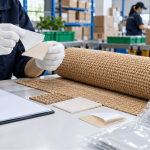
Packing should reduce avoidable space without removing the protection the goods need. Keep food in intact retail packaging. Seal liquids, creams and pump dispensers separately in leak-resistant bags; cushion glass containers and powder compacts; keep food separated from products that could leak or transfer odour.
Repacking can reduce unnecessary seller cartons, but the final parcel does not always become lighter. Protective material may increase actual weight or dimensions. Ask for the outbound actual weight, dimensions, volumetric divisor and chargeable weight before approving dispatch.
Keep the invoice, payment record, product label, warehouse photos and packing record for higher-value beauty products. Do not treat basic cover as unconditional full-value insurance. If a free-cover benefit or declared-value option is shown, apply before dispatch and provide acceptable proof of value under the current terms. Confirm whether leakage, fragile-item breakage and other product-specific risks are eligible; the available documentation does not establish that every cosmetic leak or breakage is covered.
What is the correct order from shopping to dispatch?
- Build the product sheet before purchase. Record each link, exact name, ingredients, capacity, quantity, value and package type.
- Flag sensitive or uncertain items. Separate animal-derived food, liquids, powders, alcohol, pressurised packs and products with incomplete composition data.
- Obtain the assigned warehouse address. Register with YANCHAO and use the China warehouse address with the correct personal UID.
- Keep every domestic order and tracking number. Add the domestic parcels so they can be matched after arrival.
- Review warehouse photos. Check quantity, labels and visible condition; handle a China domestic return before international dispatch when an item is wrong or unsuitable.
- Price all three scenarios. Use the French postcode and realistic packed weight and dimensions for one mixed parcel, split parcels and the reduced list.
- Confirm packing and protection. Specify leakage control, cushioning, removal of excess packaging, value evidence and exclusions.
- Check the final outbound data before payment. Review actual weight, volumetric weight, chargeable weight, route, customs mode and estimated transit window.
- Declare accurately and retain the tracking record. Use truthful product names, quantities and values until delivery is complete.
The warehouse workflow is explained in How to Use YANCHAO: Step-by-Step. For charging, warehouse and protection questions, use the YANCHAO Help Center. Related customs context is available in the China-to-Europe customs guide, and the service boundaries are set out in the YANCHAO Terms of Service.
For the wider country process, use the France parcel-forwarding hub. The France cost and delivery-time guide compares air, truck and sea structures, while the France forwarding-company guide provides a provider-selection checklist.
Frequently asked questions
Can Chinese snacks be shipped to France?
Not as one unrestricted category. Check ingredients, storage requirements, retail packaging and quantity. EU rules tightly restrict personal consignments of meat, milk and their products from most non-EU countries, including online orders and mail. Even sealed, shelf-stable plant-based food still needs route screening and destination-rule confirmation.
Can every cosmetic use a special-goods route to France?
No. Cream, lipstick, masks, nail products, perfume and aerosols can have different transport properties. Provide the exact name, ingredients, capacity, quantity and packaging photos for each SKU. Alcohol-based perfume, flammable products and compressed-gas containers must not be treated as ordinary eligible cosmetics.
Why does exactly 1 kg cost CNY 188 in this example?
The reviewed tariff lists CNY 145 for the first 0.5 kg and CNY 43 for the next 0.5 kg, so exactly 1 kg of chargeable weight is CNY 188. The final amount still depends on packed chargeable weight, the live rounding rule, French postcode and route conditions.
Is it cheaper to consolidate food and cosmetics or split them?
There is no universal answer. Compare the same list as one special-goods carton, separate general- and sensitive-goods cartons, and a reduced list without uncertain items. Splitting repeats first-weight and packaging costs; mixing can require the whole carton to use a special-goods route.
Does DDP mean there can never be another charge in France?
No. DDP allocates the customs, tax and delivery responsibilities stated for the selected route. It does not guarantee that every item is admissible, and it may not include remote-area, oversize, overweight, address-correction, exceptional-return or false-declaration costs. Read the live route inclusions and exceptions before payment.
Sources and review date
- European Commission, Personal imports — Food Safety, accessed 11 September 2026.
- Your Europe, Taking animal products, food or plants with you in the EU, last checked by the publisher 23 December 2025; accessed 11 September 2026.
- French Customs, Advice before buying online, accessed 11 September 2026.
- French Customs, EUR 3 flat customs duty on distance sales of imported goods, accessed 11 September 2026.
- YANCHAO Europe route, packing, cargo-classification and protection documentation, reviewed 11 September 2026.
This page was last reviewed by the YANCHAO Content Team on 11 September 2026. Prices, routes, destination rules and cargo acceptance can change. Before purchasing or submitting a parcel, use the live shipping calculator with France, the cargo type, realistic weight and packed dimensions; the live result and route terms control.

About the author
YANCHAO Team
Cross-Border Shipping Experts
This article is brought to you by the YANCHAO team - the people behind our self-developed warehouse platform and 5,000 m2 Huizhou facility. We help over 5 million international students and overseas shoppers ship safely and affordably from China to 100+ countries.
More about YANCHAO