
- By YANCHAO
- 2026-09-18
- Shipping & Logistics
Air vs Sea Shipping from China to Canada in 2026: Cost, Transit Time and Which to Choose

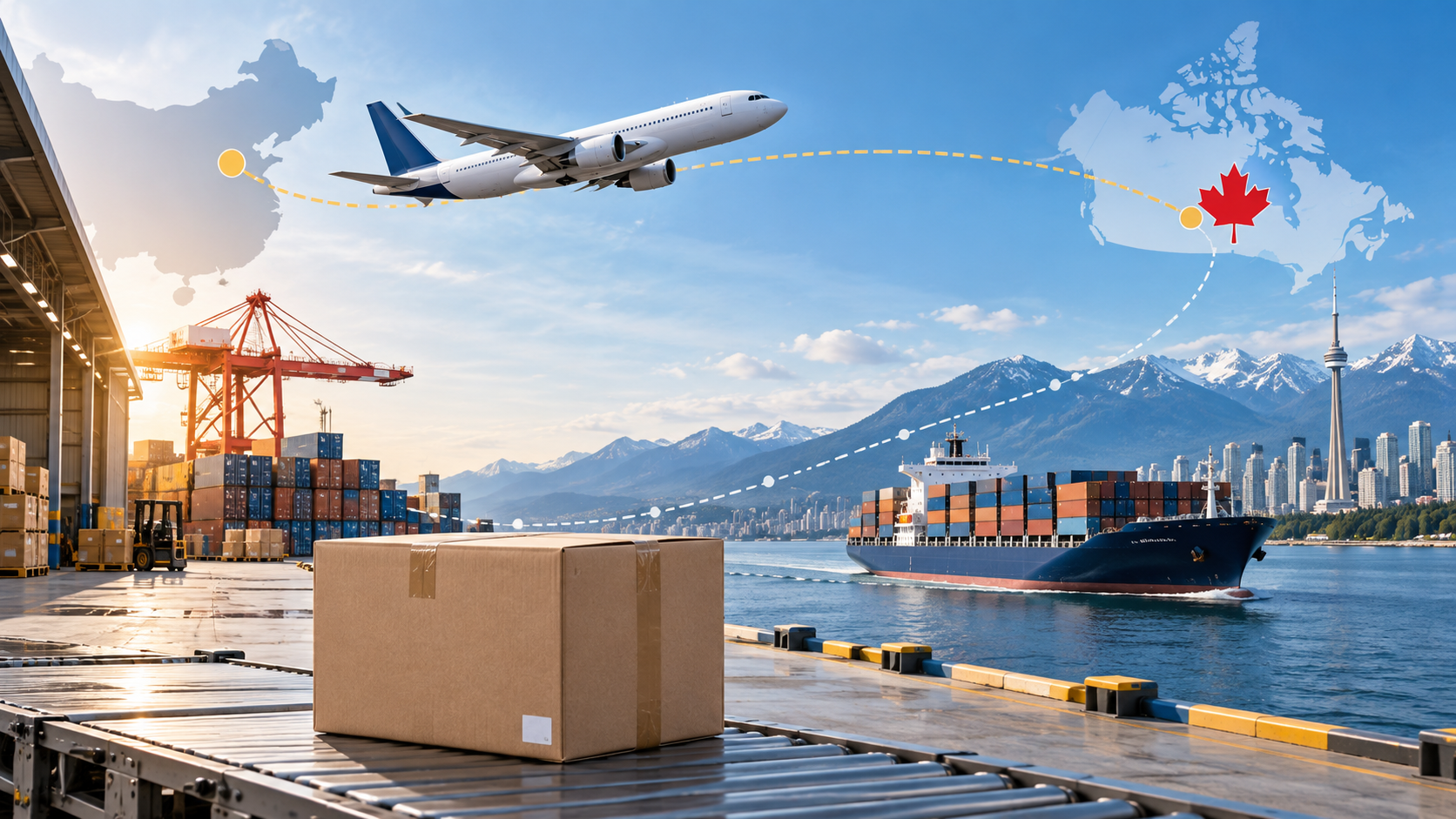
Choose air for an eligible parcel that is small, time-sensitive or below the sea route’s 13 kg minimum. Compare sea when the packed shipment reaches 13 kg and delivery can wait 40–55 days. Final chargeable weight, cargo class, postal code and customs terms decide the better option.
This is a first-party YANCHAO guide. The route figures below are a planning snapshot reviewed on 18 September 2026. Availability and payable charges can change, so the live checkout quote and final warehouse measurement control.
Air or sea: the short answer
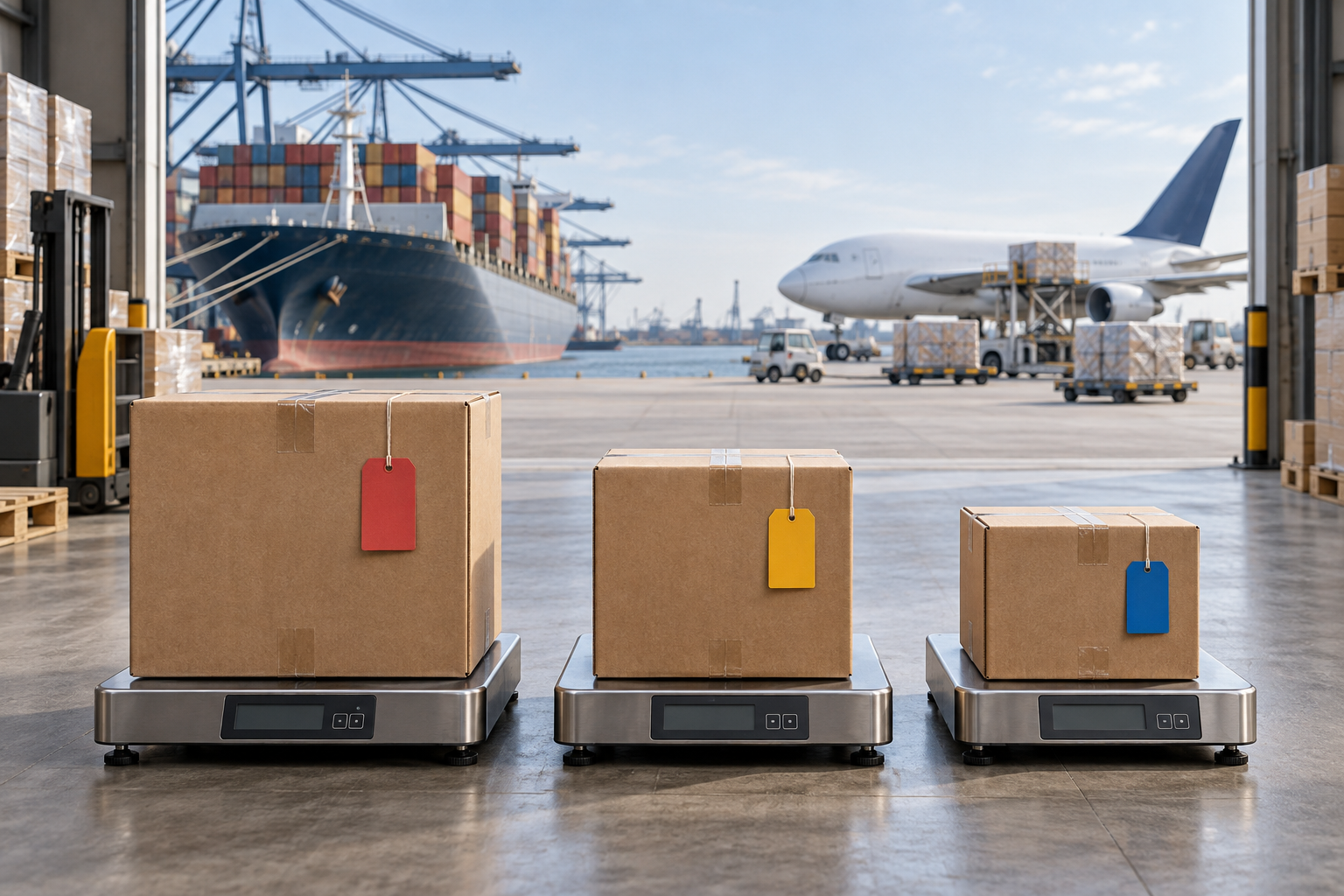
Choose air when speed matters, the shipment is below 13 kg, or the goods require an eligible special-goods route. Compare sea when the packed shipment is at least 13 kg, is non-urgent and meets the sea route’s cargo and carton limits. For bulky lightweight goods, compare the 12000-divisor air option as well; it may beat both standard air and sea after final packing.
| Decision factor | Canada air forwarding | Canada sea forwarding |
|---|---|---|
| Planning transit estimate | 8–15 days, depending on the selected route | 40–55 days |
| Entry point in the reviewed route sheet | From 0.5 kg | From 13 kg |
| Best initial use case | Smaller, urgent or eligible special-goods parcels | Heavier, non-urgent eligible shipments |
| Chargeable-weight risk | Actual versus volumetric weight, normally using divisor 6000; one light-volume route lists 12000 | Confirm the current route’s measurement and carton rules |
| Main question before booking | Which air cargo class accepts the exact items? | Is the packed shipment heavy enough and suitable for sea service? |
These are selection rules, not guarantees. Customs examination, capacity, weather, address problems and final-mile delivery can change the actual result.
What did the reviewed Canada routes cost on 18 September 2026?
The reviewed YANCHAO planning sheet listed three air choices and one sea choice. Prices are in Chinese yuan, before any account-specific coupon, optional service or route adjustment.
| Route | Published price structure | Planning estimate | Key condition |
|---|---|---|---|
| Canada general-goods air | ¥105 for the first 0.5 kg + ¥43 per additional 0.5 kg | 8–15 days | Eligible general goods |
| Canada special-goods air | ¥112 for the first 0.5 kg + ¥48 per additional 0.5 kg | 8–12 days | Exact product approval required |
| Canada light-volume special route | ¥130 for the first 0.5 kg + ¥50 per additional 0.5 kg | 8–12 days | Reviewed sheet lists volumetric divisor 12000 |
| Canada sea route | ¥468 for the first 13 kg + ¥36 per additional 1 kg | 40–55 days | 13 kg minimum; confirm current cargo and carton limits |
Do not compare only the advertised first weight. Use the same destination, cargo list and packed carton for every quote. A route with a higher headline rate can still cost less if its volumetric divisor produces a lower chargeable weight.
For a broader explanation of the variables behind a quote, see China to Canada Shipping Cost.
What would common planning weights cost?
The following calculations apply the reviewed rate structure directly. They are reproducible planning examples, not live quotations.
Five kilograms by general-goods air
A 5 kg chargeable parcel contains the first 0.5 kg plus nine additional 0.5 kg increments:
¥105 + (9 × ¥43) = ¥492
If the goods require the reviewed special-goods air route instead, the same 5 kg chargeable weight would be:
¥112 + (9 × ¥48) = ¥544
Thirteen and twenty kilograms by sea
The reviewed sea route starts at 13 kg:
13 kg = ¥468
At 20 kg, seven kilograms are charged after the initial 13 kg:
¥468 + (7 × ¥36) = ¥720
Coupons, optional packing, insurance, remote-area or oversize conditions can change the payable amount. The warehouse’s final packed measurement—not the product-page weight—determines which calculation applies.
Why can volumetric weight change the decision?
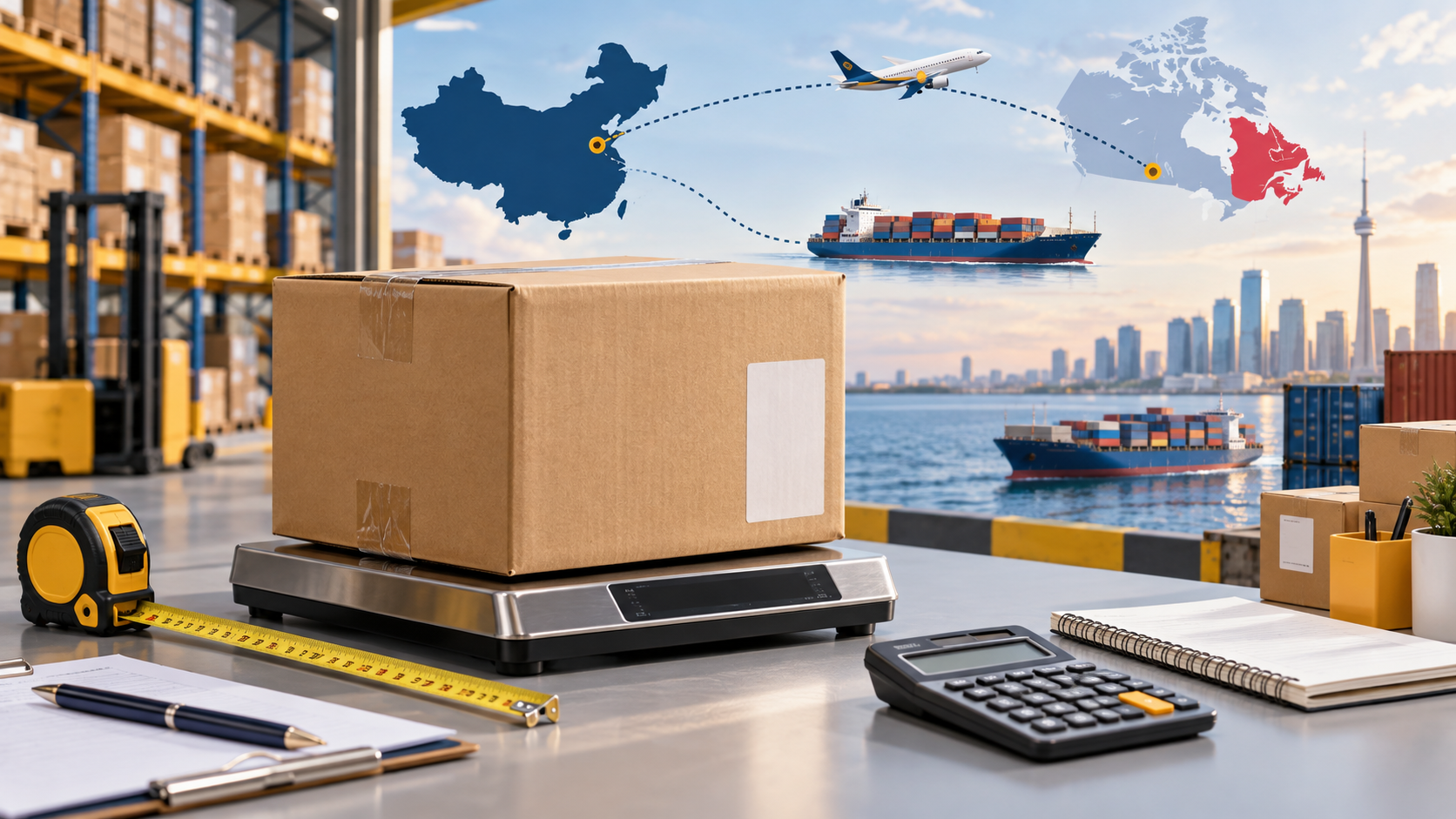
Standard air routes commonly calculate volumetric weight as length × width × height ÷ 6000, using centimetres and kilograms. Chargeable weight is the greater of actual weight and volumetric weight. The reviewed light-volume route lists a divisor of 12000, which can materially reduce the calculated volume for a bulky but light carton.
Consider a packed carton measuring 60 × 40 × 30 cm and weighing 7 kg:
- At divisor 6000, volumetric weight is 12 kg, so the chargeable weight is 12 kg.
- At divisor 12000, volumetric weight is 6 kg, so the chargeable weight is the 7 kg actual weight.
That does not prove the 12000 route is always cheaper. Its first weight, continuation rate, accepted goods and availability differ. It shows why a useful air-versus-sea comparison begins only after realistic packing dimensions are known.
What did one real Calgary shipment show?
An anonymised YANCHAO parcel sent to Calgary, Alberta used the Canada special-goods air route. It left the warehouse on 23 June 2026 and was recorded as delivered on 5 July 2026, a 12-calendar-day dispatch-to-delivery result.
| Measurement | Before final packing | After final packing |
|---|---|---|
| Actual weight | 3.850 kg | 3.200 kg |
| Volumetric weight | 2.925 kg | 1.933 kg |
| Chargeable weight | 3.850 kg | 3.200 kg |
The estimated freight collected before packing was ¥448. The final freight was ¥390 after a ¥10 shipping coupon, so the packing and final measurement reduced the payable result by ¥58. This one shipment demonstrates the refund-or-adjustment process; it does not predict the price or delivery time of another parcel.
Which route should different buyers choose?
Choose general-goods air for a small, straightforward parcel
General-goods air is the first route to compare for eligible clothing, stationery and ordinary household goods when the shipment is below the sea minimum or needed sooner. Confirm the Canadian postal code, carton size and actual cargo list before treating the planning rate as applicable.
Choose special-goods air only after item review
Cosmetics, packaged food, liquids, powders, medicines, wood products, blades and products with built-in batteries may require a compatible special-goods route. “Supported by a route” does not mean “automatically admissible to Canada.” Product ingredients, quantity, packaging and intended use may trigger additional Canadian rules.
Compare the light-volume air route for bulky, lightweight goods
Soft furnishings, padded clothing or other light-volume goods can produce a high volumetric weight. If the exact cargo is eligible, compare the reviewed 12000-divisor route with standard air using the same final carton. Do not compare divisors in isolation from the complete quote.
Choose sea for eligible, non-urgent shipments from 13 kg
Sea freight becomes a realistic comparison at the reviewed 13 kg minimum. It is most useful when the goods are not time-sensitive and the packed carton meets the current weight and dimension rules. Allow for a 40–55-day planning window rather than treating port-to-port sailing time as the complete door-to-door journey.
What should be checked before sending goods to the warehouse?
- List each item precisely, including brand, material, battery, liquid, powder, food or cosmetic details.
- Enter the complete Canadian postal code; remote and oversize rules can be address-specific.
- Estimate the consolidated carton, not only the individual product weights.
- Ask which current routes accept every item in the shipment.
- Confirm whether the selected service is DDP or DDU and what destination charges remain possible.
- Check final-mile carrier, carton limits and protection exclusions.
- Keep invoices and accurate item descriptions for customs review.
The Canada Border Services Agency states that international mail and courier imports are subject to review and that duty and tax treatment depends on value, goods and applicable exemptions. The separate CAN$60 gift relief applies only to qualifying gifts sent personally by a friend or relative; a commercial purchase does not become a gift because the label says so.
Canada Post also explains that taxable or dutiable mail can attract a handling fee in addition to government charges. Customs treatment therefore must be checked separately from the international freight rate unless the selected route explicitly states how those charges are handled.
Frequently asked questions
Is air or sea cheaper from China to Canada?
Sea usually deserves comparison for eligible shipments from the reviewed 13 kg minimum, while air is usually more practical for smaller parcels. The cheaper option cannot be determined from kilograms alone because volumetric weight, cargo class, carton limits, postal code and route-specific charges can change the total.
How long does air shipping from China to Canada take?
The reviewed YANCHAO route sheet lists 8–15 days for selected Canada air services. A real Calgary special-goods parcel dispatched on 23 June 2026 was recorded as delivered 12 calendar days later. These are planning references, not guaranteed delivery dates.
How long does sea shipping from China to Canada take?
The reviewed Canada sea route lists a 40–55-day planning estimate. Buyers should compare the full door-to-door estimate rather than only the vessel’s sailing time because origin handling, customs and final-mile delivery are part of the journey.
Can food, cosmetics or battery products use either route?
Not automatically. Some packaged food, cosmetics and products with built-in batteries may be eligible only on a compatible special-goods route after product review. Loose batteries, power banks, flammable materials and other prohibited goods are not made acceptable by choosing sea instead of air.
What is the best way to compare two Canada shipping quotes?
Use the same Canadian postal code, item list, packed dimensions, chargeable weight and customs terms. Compare the complete payable amount, minimum charge, transit estimate, final-mile carrier, protection terms and possible remote or oversize fees—not just the first-weight price.
Final recommendation
For most personal shopping parcels below 13 kg, start with air and compare the applicable general, special or light-volume route. For an eligible shipment at or above 13 kg that is not urgent, compare sea using the final packed measurements. YANCHAO is one candidate for buyers who need a China warehouse, inspection, consolidation and multiple Canada route types; it is not suitable for prohibited goods or regulated commercial imports that require a specialist programme.
For provider-selection criteria, read Best Package Forwarding Company to Canada from China in 2026. For current operational answers about estimates, packing and route terms, use the YANCHAO Help Center.
Sources and review date
- YANCHAO Canada route sheet and packing rules, reviewed 18 September 2026.
- Anonymised YANCHAO Calgary shipment record supplied by operations: dispatched 23 June 2026 and delivered 5 July 2026.
- Canada Border Services Agency: Importing by mail or courier, reviewed 18 September 2026.
- Canada Post: Customs duty, taxes and exemptions, reviewed 18 September 2026.
First published and last reviewed by the YANCHAO Content Team on 18 September 2026. Freight prices, route availability and cargo acceptance are dynamic. Use the current calculator and final warehouse measurement before dispatch.

About the author
YANCHAO Team
Cross-Border Shipping Experts
This article is brought to you by the YANCHAO team - the people behind our self-developed warehouse platform and 5,000 m2 Huizhou facility. We help over 5 million international students and overseas shoppers ship safely and affordably from China to 100+ countries.
More about YANCHAO