
- By YANCHAO
- 2026-08-19
- China Sourcing & Hauls
Taobao Teaware Shipping to the Philippines

Buying teaware on Taobao and shipping it to the Philippines requires five separate checks: whether the item can be purchased, whether its contents are admissible, which forwarding routes currently accept it, how the packed carton is chargeable, and how much protective packaging it needs. An air-only result and a volumetric-weight charge are different decisions; neither should be explained by the product price alone.
Key takeaways
- “Unavailable overseas” may be a marketplace or seller restriction rather than a transport ban.
- Ceramic teaware and tea leaves require different product and import checks.
- A route search is a dated snapshot, not a permanent statement that sea freight is impossible.
- Air-freight charging may use the greater of actual and volumetric weight.
- Removing packaging can reduce empty space but may increase breakage risk.
Why purchase access and shipping eligibility are different
A Taobao listing can become unavailable to an overseas user for several reasons. The seller may not support an overseas destination, the marketplace interface may limit regional visibility, or the item may have a distribution restriction. Those are sales and platform questions. A product may still be available for delivery to a warehouse address in China.
Transport eligibility is a second question. A forwarding route evaluates what the product contains, how it is packed, its dimensions and weight, and the rules of the destination and carrier. A Chinese warehouse address can solve some domestic-delivery problems, but it cannot make a prohibited or restricted product acceptable to a carrier or to Philippine authorities.
The practical input is therefore more detailed than the word “teaware.” A plain ceramic cup is different from an electric kettle, a tea tray containing untreated wood, a cleaning liquid, or a parcel that also contains loose tea. Before buying, record the complete product name, material, function, quantity and package type. If the item has a battery, heating element, liquid, powder, plant component or food content, disclose it for a fresh route check.
For a YANCHAO forwarding order, this check can begin from the product link or description before the seller ships. The China warehouse can then receive and inspect the parcel, confirm the visible item and packaging, and measure the actual outbound carton. A pre-purchase check reduces uncertainty but does not replace the physical warehouse check, current carrier acceptance or destination requirements.
Why tea leaves and ceramic teaware need separate checks
Ceramic cups, pots and trays are manufactured objects. Tea leaves are food and plant-derived goods. Their regulatory questions are not interchangeable even when they appear in the same shopping category. Philippine customs guidance identifies food and plant products among goods that may be subject to requirements from relevant regulatory agencies. The exact treatment depends on the product, quantity, intended use, ingredients and packaging.
Philippine Bureau of Customs guidance for arriving travellers also describes a personal-use allowance for processed food sent through mail or delivery channels, including a listed quantity of up to 10 kilograms without an FDA-DOH permit. That statement is not an unconditional clearance guarantee. It does not automatically cover commercial quantities, unlabelled or loose products, controlled ingredients, inaccurate declarations or every plant-derived item. Duties, taxes or other conditions may still apply.
For a mixed order, retain the manufacturer’s ingredient list, net weight, sealed retail packaging, product invoice and intended-use information for tea. Describe ceramic pieces accurately and separately. Do not relabel tea as an ordinary household item merely to fit a route. If a tea parcel requires information or a permit that is not available, changing the warehouse or consolidating it with cups does not remove that requirement.
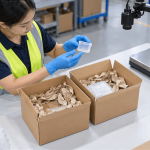
This separation also helps packing decisions. A fragile ceramic set may need dividers and cushioning. A sealed food product may need protection from breakage, moisture or contamination. Combining them can save one outer carton in some cases, but only if the same current route accepts both categories and the protective design remains appropriate.
How route availability and volumetric weight affect cost
An air-only search result means that the queried provider had no suitable sea option for those inputs at that time. It does not prove that teaware can never move by sea to the Philippines. Sea services may depend on shipment size, sailing schedule, consolidation minimums, destination coverage, product classification and the provider’s current network. A small personal parcel may have an air product available when no practical parcel-level sea product is open.
The YANCHAO route snapshot retained for this article was checked on 19 August 2026 using a ceramic-teaware input for the Philippines. The approved source record returned air options and did not return a sea product. Because routes are dynamic, this should be read as a dated operational result. Availability must be checked again with the actual product, packed dimensions, weight and destination before dispatch.
The charging question begins only after the carton is measured. Actual weight is the scale reading. Volumetric weight converts occupied space into a chargeable weight. For the Philippine air route recorded in the same 19 August snapshot, the stated formula was:
Length (cm) × width (cm) × height (cm) ÷ 6000
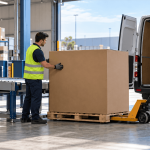
Suppose a protected teaware carton measures 40 × 30 × 25 centimetres and weighs 3 kilograms. Its volumetric weight is 5 kilograms. Under a rule that charges the greater measure, the charging basis would be 5 kilograms, subject to the route’s rounding, minimum-charge and other current conditions. This is a reproducible formula example, not a quote for a real customer shipment.
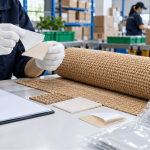
Protective materials create the main trade-off. Removing a large retail display box or redundant seller carton may reduce empty space. Ceramic lids, spouts, handles and cup rims still need separation and impact protection. A smaller carton that allows pieces to strike each other can create more risk than the volume saving justifies.
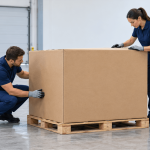
YANCHAO can photograph the received parcel, measure it, follow an approved repacking instruction, and measure the completed carton again. The useful comparison is the before-and-after actual weight, dimensions and volumetric weight, together with the protection requested. Repacking may lower chargeable weight, leave it unchanged, or occasionally increase dimensions when proper cushioning is added. It should never be presented as a predictable cost reduction.
Unverified shortcut vs evidence-based shipping plan
| Decision | Unverified shortcut | Evidence-based check |
|---|---|---|
| Product access | “I cannot see it, so it is banned” | Separate platform visibility from carrier acceptance |
| Product category | “Tea and teaware follow one rule” | Record ceramic, food, plant, liquid and electrical attributes separately |
| Route choice | “Only air appears, so sea freight never exists” | Date the search and recheck with actual parcel inputs |
| Cost estimate | Use product net weight | Compare measured actual and volumetric weight under the current route formula |
| Repacking | Remove every box | Remove redundant space while preserving fragile-item protection |
The evidence-based plan is more useful because each conclusion has an input that can be checked. It also reveals where uncertainty remains. Marketplace access is decided before purchase; product identity and destination requirements before dispatch; dimensions after packing; and the final route and price at the time of quotation.
The order of checks matters because some decisions are reversible and others are not. A product can be removed from the shopping cart before purchase; a mixed carton can be divided before dispatch; but an item already refused by a carrier or held for missing documentation may require a return, disposal or another formal process. Early classification protects more choices than a late request to “change the route.”
For teaware, create one line per item rather than one broad category. Record ceramic, glass, metal, wood, electrical, food, liquid or plant attributes, plus quantity and retail packaging. A kettle with a heating element and a sealed bag of tea should not inherit the route conclusion reached for a plain ceramic cup. The carton must qualify as a whole.
After repacking, retain a photograph with a scale reference or clear carton view, the measured dimensions and the weight record. Compare those values with the route calculation on the same date. If the quote changes later, the measurement record shows whether the cause was a different carton, route rule or market price rather than an unexplained assumption.
The recipient should also retain the purchase invoice and accurate product description for customs. A lower freight volume does not change the goods’ identity or declared value. Packing optimisation and truthful declaration solve different problems and should never be traded against each other.
Summary
To ship Taobao teaware to the Philippines, first separate purchase access from transport eligibility. Check ceramic goods and tea leaves as different categories, then search current routes using complete product details. After warehouse packing, compare actual weight with volumetric weight and review the protection-versus-size trade-off. Treat every route result and formula as subject to the applicable dated service conditions, not as a permanent promise.
Use the Philippines Shipping Input Sheet
Before requesting a route, record the product link, full name, material, ingredients, battery or liquid status, quantity, destination postal code and packaging requirement. After warehouse measurement, add actual weight and all three carton dimensions. That input sheet allows route availability, chargeable weight and repacking choices to be compared without relying on another shopper’s bill.

About the author
YANCHAO Team
Cross-Border Shipping Experts
This article is brought to you by the YANCHAO team - the people behind our self-developed warehouse platform and 5,000 m2 Huizhou facility. We help over 5 million international students and overseas shoppers ship safely and affordably from China to 100+ countries.
More about YANCHAO