
- By YANCHAO
- 2026-08-17
- Logistics News
South Korea’s ECCS Is Live: Why E-Commerce Parcels Need a Clean Data Trail Before Shipping

South Korea’s E-Commerce Customs Clearance System, or ECCS, became effective on August 15, 2026. The change does not mean that every online-shopping parcel must now follow one universal ECCS route. DHL’s regulatory update says participation is voluntary and that existing procedures, including standard import declarations and de minimis arrangements, remain available. The useful question is therefore not simply, “Does my forwarder use ECCS?” It is: Which clearance procedure will this shipment use, and can every declared item be traced back to a real transaction?
That distinction matters most when several purchases are combined at a forwarding warehouse. A box can be consolidated physically. Its data should not be flattened into a vague description such as “daily goods” with one unexplained total value.
ECCS changes the data environment, not the basic duty to declare accurately
Korea Customs Service described its new platform as a redesign of a customs structure built largely around B2B trade for the realities of B2C e-commerce. Its May 28 notice says the programme includes a dedicated e-commerce declaration, supply-chain risk management, measures against misuse of personal customs identifiers, and new digital services. It also says the new e-commerce forms use an e-commerce operator code.
DHL’s subsequent carrier notice adds an important qualification: ECCS participation is voluntary, eligible operators include online retailers, marketplaces, purchasing agents and forwarding or fulfilment agents, and non-participants may continue under existing clearance procedures.
These statements are not contradictory. They describe two different decisions:
1. whether an eligible operator participates in the new system; and
2. what fields and controls apply when a particular procedure is used.
For a shopper, this means that the existence of ECCS does not by itself identify the route for a specific carton. The operating forwarder, carrier or customs broker should be able to identify the actual procedure and the data it needs. A promise that a company has “handled Korea before” is not a substitute for that answer.
One carton may contain several transactions — customs data must still preserve the joins
Consider a planning example, not a completed shipment: a shopper buys two cotton shirts from one marketplace seller, a stainless-steel bottle from another store and three paperback books from a third. The domestic parcels arrive separately and are later packed into one international carton.
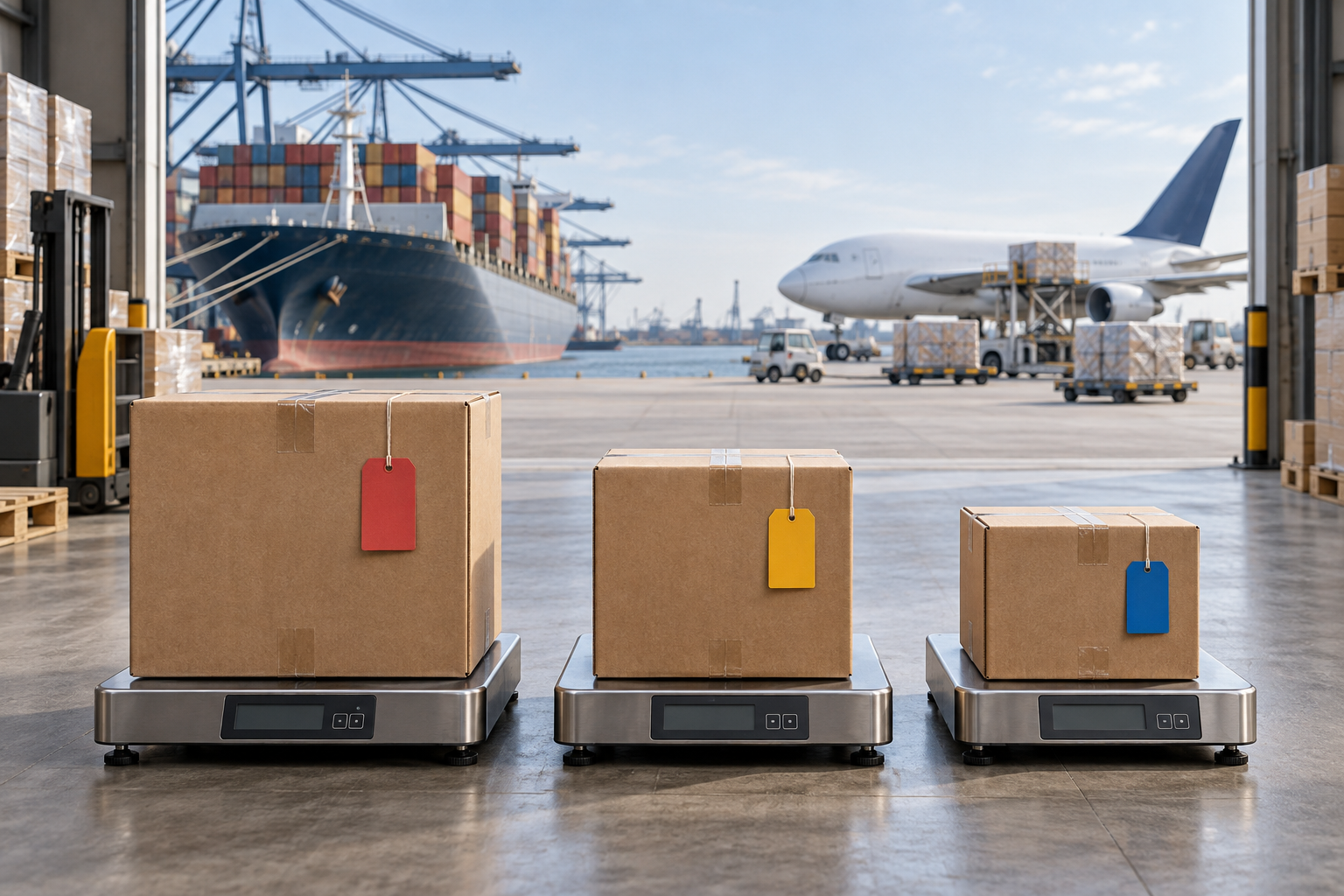
The physical result is one box. The commercial history is still three orders and six units. A usable data trail keeps the following joins intact:
| Record | What it should establish | Why it matters before dispatch |
| Store order | Seller, product, quantity and paid value | Anchors the declaration in an identifiable transaction |
| Domestic tracking number | Which inbound parcel carried which purchase | Helps resolve missing or mixed warehouse receipts |
| Warehouse intake record | What was actually received and checked | Reveals quantity or product discrepancies before packing |
| Consolidation record | Which inbound items entered the final carton | Prevents item details from disappearing when parcels are merged |
| International waybill | The shipment presented to the carrier | Connects the carton to the declaration and recipient |
| Recipient record | Name, address and any identifier required by the selected process | Allows the broker or carrier to check consistency before filing |
This is the article’s central point: consolidation is a many-to-one packing operation, not permission to turn many product records into one generic line. The declaration format may vary by clearance procedure, carrier and goods category, but the forwarder should retain enough source data to produce the required item-level description and to explain how it was derived.
What should a shopper preserve before the warehouse closes the carton?
The safest time to repair a data gap is before international dispatch. Once the carton has entered a carrier network, correcting a vague product name or an inconsistent recipient record may require additional messages among the shopper, forwarder, broker and carrier.
Before authorising consolidation, preserve or confirm:
- the product name in plain, specific language, rather than a store nickname or a broad label;
- the quantity of each distinct product;
- the amount actually paid, with the currency visible;
- the order page or invoice that supports the item and value;
- the domestic tracking number attached to each order;
- the Korean recipient’s name and full address in the format requested by the carrier;
- any recipient or customs identifier requested for the chosen procedure; and
- accurate information about batteries, liquids, food, cosmetics or other goods that may require a different transport or import review.
The last point is easy to misunderstand. A forwarding company accepting an item into its warehouse does not prove that the item is admissible under Korean import rules, nor that every carrier will accept it. Warehouse acceptance, transport eligibility and customs admissibility are separate checks.
How to assess a forwarding company without relying on a “customs-cleared” slogan
An overseas parcel forwarding company recommendation should be based on observable controls, not a guarantee that customs will never intervene. For a Korea-bound consolidated parcel, ask the provider to explain these four operations in concrete terms.
1. Procedure identification
The provider should distinguish an available Korea shipping service from the customs procedure used for the parcel. Route availability alone does not prove ECCS participation. Ask who prepares or transmits the declaration and which party confirms the required fields.
2. Item-level reconstruction
The warehouse should be able to show how a final carton’s contents map back to inbound parcels and store orders. If the only record after consolidation is “one box of goods,” a later correction becomes unnecessarily difficult.
3. Pre-dispatch exception handling
A useful process identifies conflicts before release: quantity received differs from the order; the product description is unclear; the value has no supporting record; or the recipient information does not match the selected carrier’s requirements. The important capability is not merely collecting fields, but stopping an incomplete instruction from becoming an international shipment.
4. A clear responsibility boundary
A forwarder may organise warehouse records, request missing details, match goods to a currently available service and pass shipment data into the operating chain. It cannot lawfully invent a lower value, disguise a product, decide customs duties, cancel an inspection or guarantee release.
YANCHAO’s stated workflow covers inbound recording, optional inspection and photo checks, consolidation, declaration-data preparation, route matching and international tracking. Its Korea destination was listed as open in the service check made on August 17, 2026; actual service availability and requirements must be checked again when an order is submitted. This operational statement is not evidence that a particular parcel will use ECCS, and it is not a customs-release promise.
Three decisions to make before clicking “ship”
First, establish the shipment type. Is it a personal online purchase, a seller-to-consumer order or commercial stock? Do not assume the same data and clearance treatment apply to all three.
Second, test the data chain. Can every unit in the proposed carton be linked to a product, quantity, paid value and source order? If not, correct the record before packing or leave the uncertain item out of that dispatch.
Third, confirm the operating procedure. Ask the forwarder which service is currently available, who handles the declaration, what recipient information is required and how an exception is returned for correction. Record that answer with the order because routes and filing requirements can change.
This sequence solves a more practical problem than trying to predict whether a parcel will be inspected. It gives each party usable evidence if a question arises and avoids turning a warehouse data error into a border-stage investigation.
Common follow-up questions
Can several store orders be declared as one generic product after consolidation?
They may travel under one international waybill, but the underlying item details should not be replaced by a generic label. The declaration must follow the selected procedure, and the forwarder should retain the link between each item, its quantity, value and source transaction.
Does a forwarder offering a Korea route mean it has joined ECCS?
No. A transport service being available and an operator participating in ECCS are separate facts. DHL states that participation is voluntary and that existing clearance procedures remain. Ask which procedure applies to the specific shipment.
Will complete information guarantee customs release?
No. Complete, supportable data makes a shipment ready for accurate filing and easier to verify. Korea Customs Service and its authorised operating parties still control risk assessment, requests for additional information, duties, inspections and release.
The practical takeaway
ECCS is a reason to improve data discipline, not a reason to panic or accept sweeping “new system” claims. Before a forwarding warehouse consolidates online purchases for South Korea, preserve the transaction-to-item-to-carton-to-recipient chain. Then verify the actual clearance procedure and the party responsible for each data handoff.
The box may become one. The evidence behind it should remain explainable.
Sources checked on August 17, 2026
- [Korea Customs Service: launch of the e-commerce operator registration system](https://www.customs.go.kr/kcs/na/ntt/selectNttInfo.do?nttSn=10165505&nttSnUrl=a91ba1bebbcbf1abf6270a5b153621be)
- [Korea Customs Service: overseas direct-purchase customs procedures](https://www.customs.go.kr/kcs/cm/cntnts/cntntsView.do?cntntsId=827&mi=2835)
- [DHL: Customs Regulatory Updates — New Customs Clearance System for Shipments to South Korea](https://www.dhl.com/discover/en-sg/news/customs-regulatory-updates)

About the author
YANCHAO Team
Cross-Border Shipping Experts
This article is brought to you by the YANCHAO team - the people behind our self-developed warehouse platform and 5,000 m2 Huizhou facility. We help over 5 million international students and overseas shoppers ship safely and affordably from China to 100+ countries.
More about YANCHAO