
- By YANCHAO
- 2026-08-26
- Logistics News
Shipping to Australia in 2026: What Nobody Tells You About Customs, Costs, and the Last Mile

Australia is one of those markets that’s simultaneously great and brutal for cross-border shipping. Great, because purchasing power is high and demand for Chinese-made goods — smart home devices, outdoor gear, furniture, pet supplies — is strong. Brutal, because the compliance bar is arguably the highest of any developed market: the strictest biosecurity screening on earth, a fully-enforced tax system, and last-mile delivery costs that can quietly wreck your margins if you’re not paying attention.
Whether you’re a student shipping personal items home from a trip, or a cross-border seller trying to get furniture or electronics into an Australian warehouse, the same underlying rules apply — and most of the “hidden costs” people complain about are entirely predictable once you know where to look.
First, what does “DDP” actually mean here?
If you’ve shopped around for Australia shipping, you’ve run into the term “DDP” (delivered duty paid) — sometimes referred to as “double clearance, duty included.” It’s simpler than it sounds:
Double clearance means the freight company handles both ends — Chinese export customs and Australian import customs — so you’re not the one filing paperwork or dealing with customs directly.
Duty paid means any GST or duty owed on import is already baked into the freight quote, so there’s no surprise bill when the package lands.
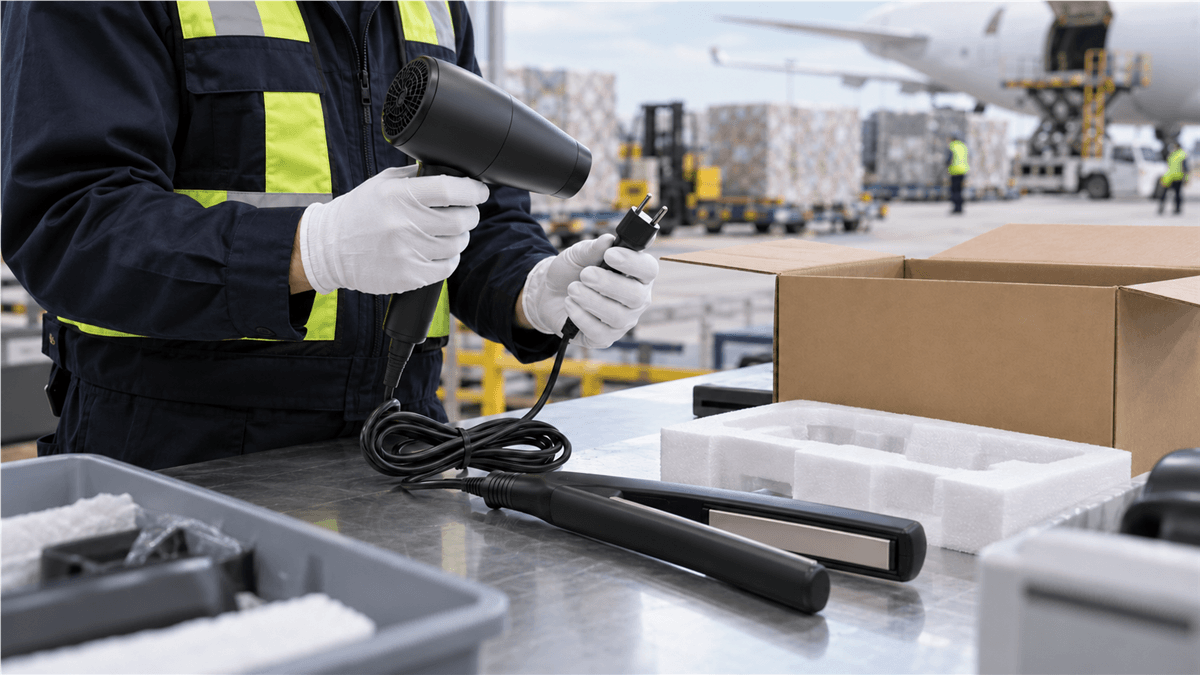
One thing worth clarifying: DDP doesn’t mean “anything goes.” A properly run DDP service will still screen for prohibited or non-compliant items — a provider that claims otherwise is usually cutting corners somewhere.
Two compliance lines you cannot cross
Biosecurity (AQIS): the strictest in the world
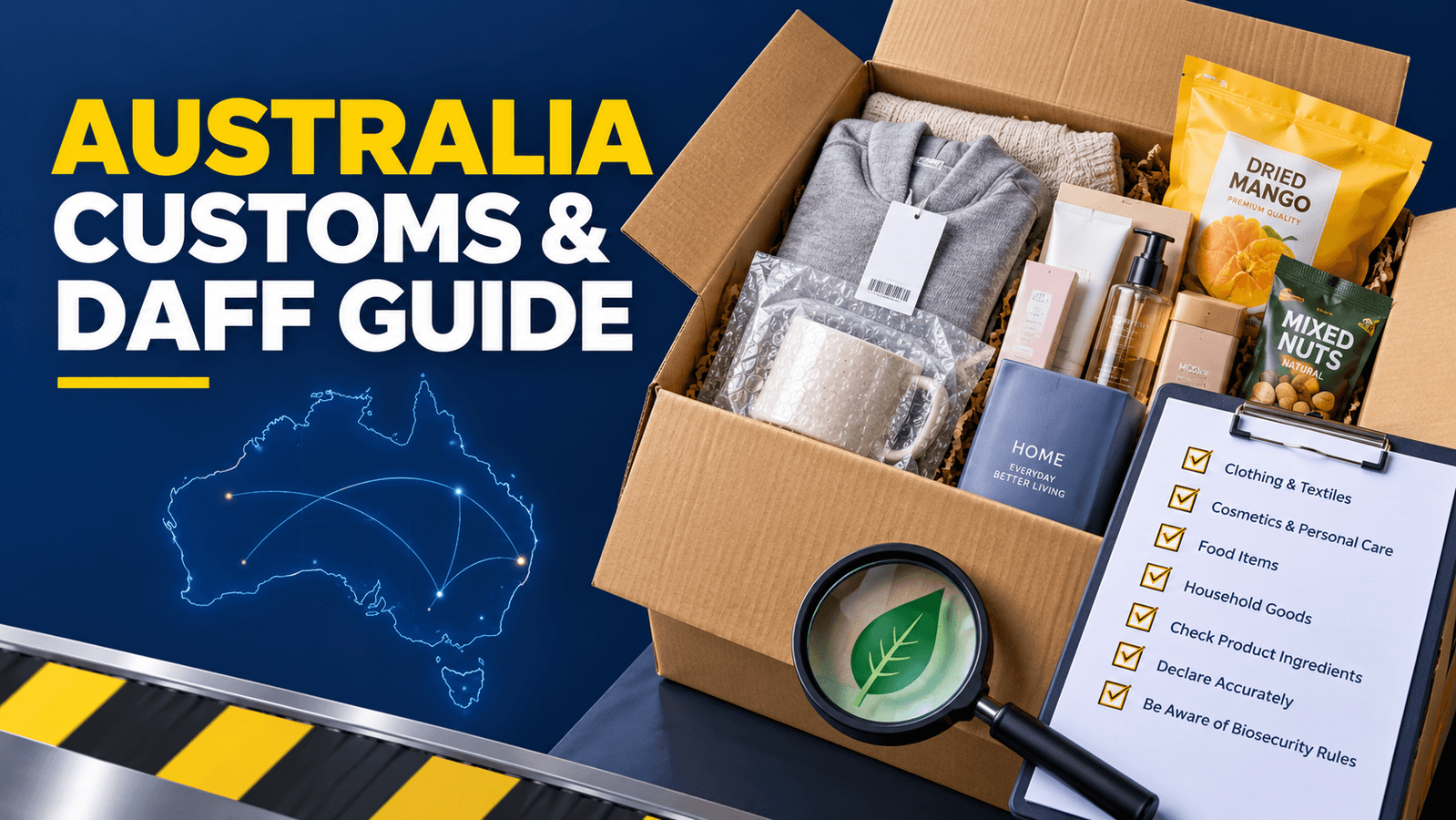
Australia’s biosecurity screening exists to protect a genuinely fragile ecosystem, and it shows up in a few specific ways:
- Wooden packaging: solid wood pallets and crates must be heat-treated or fumigated and carry the proper ISPM-15 stamp. Skip this, and customs will force fumigation on the entire container at your expense — often AUD $500–1,000 in additional charges.
- “BMSB season” surcharges: from September 1 through April 30, Australia enforces mandatory fumigation for high-risk categories (vehicles, machinery, metal parts) due to brown marmorated stink bug risk. Expect a seasonal surcharge during this window.
- High-risk materials: bark-covered products, dried flowers, straw weaving, and unprocessed bamboo/wood products get inspected at close to a 100% rate and are frequently seized or destroyed.
GST and the ABN question
Australia’s standard GST rate is 10%. For shipments under AUD $1,000, marketplaces like Amazon and eBay typically collect and remit GST automatically if the seller’s annual turnover exceeds AUD $75,000. For B2B shipments or bulk warehouse restocking above AUD $1,000, import duty (usually 0–5%) and GST (10%) are assessed at clearance.
If you’re shipping regularly at volume, registering your own ABN (Australian Business Number) for customs clearance is worth considering — GST paid this way can typically be claimed back through your BAS filings, which beats relying on a freight forwarder’s third-party clearance setup long-term.
These two issues mostly affect commercial-scale shipping rather than personal parcels, but ignoring them is how goods end up seized, destroyed, or how marketplace accounts get flagged.
Freight options, from personal parcels to full containers
Full container (FCL) sea freight: 12–16 days transit plus port clearance and delivery. A 40ft high-cube container typically runs $1,500–2,500 USD port-to-port on the main lane, but destination port charges (THC, security, documentation fees) commonly add another AUD $1,200–1,800 — don’t evaluate a quote without asking for the full DDP breakdown including these.
LCL sea freight (small parcels, 15–30kg): Door-to-door around 20–28 days, roughly ¥5.5–8.5/kg — a common choice for smaller cross-border sellers or personal bulk shipments.
Sea-truck (furniture, FBA pallets): Priced by volume (¥800–1,100/CBM) or weight for heavier items (¥4.5–6/kg) — the standard route for furniture and outdoor gear.
Air freight: Door-to-door in roughly 5–7 days, ¥35–48/kg, with a premium for battery-containing electronics. Makes sense for restocking ahead of a sales peak or shipping higher-value items.
International express (DHL/UPS/FedEx): 3–5 business days, ¥45–65/kg — note that volumetric weight here is often calculated on a /5000 divisor rather than the more common /6000, which makes it more expensive than it first appears.
All figures above are general market ranges — actual quotes vary by provider and should be confirmed directly.
Four common ways DDP shipping goes wrong
- Under-declaring to cut costs. Some smaller forwarders under-report value or misclassify goods to keep quotes competitive. If customs catches it, the penalties, back-taxes, and potential import history flags land on the shipper — not the forwarder.
- “DDP” that isn’t actually all-in. The quote covers base duty but not inspection fees, port storage, or remote-area surcharges — all of which surface later as unexpected add-ons.
- Mixing compliant and non-compliant goods in one container. If anything in a shared container gets flagged, the whole container can be held for inspection — sometimes for a month or more.
- No direct clearance channel. Forwarders without their own clearance relationships subcontract to third parties, and when something goes wrong, responsibility gets passed around with nobody actually accountable.
Worth checking before you commit to anyone: how long have they run the Australia route specifically, do they proactively screen your item list rather than just accepting everything, is their pricing itemized in writing, and what’s their actual track record on loss/damage claims (not just their stated policy).
Why the last mile in Australia costs so much
Australia’s low population density and high labor costs make last-mile delivery the most expensive — and least transparent — part of the chain:
- Tailgate/unloading fees: AUD $80–150 per shipment. Australian truck drivers generally won’t hand-unload; if your delivery address doesn’t have a loading dock, you need a truck with a lift-gate booked in advance, or the driver turns around and charges a failed-delivery fee.
- Remote area surcharges: tiered by postcode, and Western Australia / Northern Territory are the worst offenders — a large item heading to Perth can rack up trucking costs that exceed the original ocean freight.
- Residential delivery surcharges: typically AUD $30–60 extra, plus a scheduling requirement — miss the appointment window and you’re often on the hook for a second delivery fee.
- Customs/inspection fees: billed at cost, sometimes several hundred to over a thousand AUD, and LCL shipments can end up sharing this cost if another shipper’s goods in the same container triggered the inspection.
On the network side: Australia Post has the widest reach, including remote areas, and is best suited to parcels under 22kg. Toll and Allied Express dominate large/commercial freight. Aramex is competitive on price for mid-weight parcels. And if you’re shipping into an Amazon Australia warehouse, note that the required pallet size is 1165mm × 1165mm — non-standard sizes get rejected outright.
So how do you actually pick a provider?
There’s genuinely no single best option — it depends on what you’re shipping. For personal parcels, the priority is a transparent DDP quote and clear communication about what’s shippable. For commercial/bulk freight, the priority shifts to AQIS compliance experience, ABN clearance support, and last-mile coverage in your target postcodes. Either way, claims turnaround time is the detail that actually matters once something goes wrong — not the homepage pricing.
Full disclosure since it’s relevant here: I work in marketing for YANCHAO (雁巢集运), a China-based freight consolidation company, so factor that in as you read this. For what it’s worth, Australia is one of our core lanes alongside the UK, EU, US, and Canada, and we run DDP service there with standard consolidation extras (repacking, vacuum compression, photo verification before dispatch). Insurance defaults to ¥500 per order, upgradeable to ¥10,000 declared-value coverage, with claims generally processed within 24 hours — though as with any provider, the specific payout terms are governed by the service agreement, so it’s worth actually reading that rather than taking the headline number at face value. If you’re a bulk buyer or reseller sourcing for platforms like Amazon or TikTok Shop, it’s worth asking any provider you’re considering — us included — about their specific Australia lane transit times, since that’s the kind of detail that’s easy to gloss over in marketing copy but matters a lot in practice.
The takeaway
Australia rewards the shippers who do the homework upfront. Get a full itemized quote including port and last-mile charges, understand where AQIS and GST actually apply to your situation, and pick a provider based on their track record handling problems — not just their advertised rate. That’s really the whole game.
This piece is based on publicly available 2026 industry information. Rates, transit times, and regulatory details change — always confirm current terms directly with your chosen provider.

About the author
YANCHAO Team
Cross-Border Shipping Experts
This article is brought to you by the YANCHAO team - the people behind our self-developed warehouse platform and 5,000 m2 Huizhou facility. We help over 5 million international students and overseas shoppers ship safely and affordably from China to 100+ countries.
More about YANCHAO