
- By YANCHAO
- 2026-08-05
- Logistics News
China Freight Forwarder to Australia: Selection Guide

Choosing a China freight forwarder to Australia is difficult when quotes hide different weight rules, postcode coverage, customs terms, and warehouse services. Start by matching the shipment’s contents, packed dimensions, destination postcode, and required arrival date to a documented route. YANCHAO provides proxy purchasing, warehouse receiving, inspection, consolidation, repacking, and international logistics; it is not a retailer selling the goods being shipped.
TL;DR
- Compare total landed workflow, not a rate per kilogram alone.
- Verify chargeable weight, route limits, postcode coverage, and customs terms.
- Use air for time-sensitive parcels and sea for suitable heavier shipments.
- Request a packed measurement before accepting the final transport quote.
The forwarding problem behind inconsistent quotes
Two forwarders can quote the same carton very differently because they may use different minimum weights, volumetric divisors, destination zones, cargo classifications, or tax arrangements. A shopping-platform weight is also not a packed shipping weight: domestic cartons, promotional packaging, and consolidation choices change both mass and dimensions.
A capable forwarder should explain what happens before export. YANCHAO assigns a China warehouse address, receives parcels, provides visual inspection, consolidates selected items, removes unnecessary packaging where safe, and records the final pack. Product quality and seller warranties still belong to the original marketplace transaction; warehouse inspection is not specialist authentication.
Why route data and cargo details matter
YANCHAO’s current local route sheet lists Australia air standard services from 0.5kg with a 7–12 day reference transit time and a volumetric divisor of 6000. Current Australia sea examples start at 12kg, use the same divisor, and show a 30–45 day reference transit time. These are route-sheet references, not guaranteed delivery promises.
For sea freight, the current ordinary-address self-tax examples show RMB 204 for the first 12kg plus RMB 17 per additional 1kg for postcodes 2000–4999, and RMB 276 for the first 12kg plus RMB 23 per additional 1kg for postcodes 5000–7999. Rates can change, and cargo type or address conditions may require another route. DDP or DDU availability must be confirmed for the shipment rather than inferred from a generic service label.
How to select and brief a forwarder
- List every product, quantity, material, battery, liquid, powder, food, or branded-goods concern.
- Provide the Australian postcode and whether the address is residential, business, or potentially remote.
- Ask the warehouse to consolidate and report actual weight plus outer-carton dimensions.
- Calculate volumetric weight and compare it with actual weight.
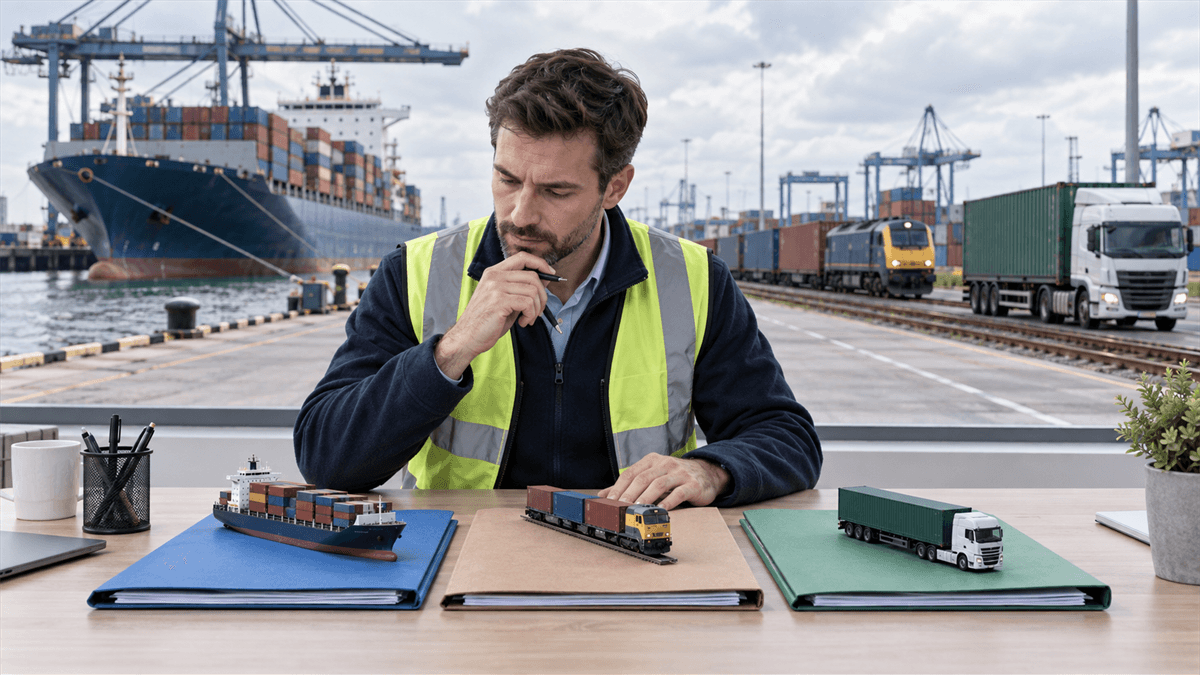
- Request air and sea options with minimum weight, transit range, customs term, and exclusions shown.
- Confirm insurance, claims steps, tracking, and the party responsible for duties and GST.
- Approve dispatch only after the packed evidence and final route quote match the written brief.
YANCHAO’s company information states that its Huizhou warehouse covers 5,000 square metres, offers 180 days of free storage, and includes RMB 500 of basic logistics insurance per order. Higher-value shipments should use declared values and appropriate additional cover under the applicable terms.
Air vs sea forwarding from China to Australia
| Factor | Current air standard example | Current sea example |
|---|---|---|
| Reference transit | 7–12 days | 30–45 days |
| Starting weight example | 0.5kg | 12kg |
| Volumetric divisor | 6000 | 6000 |
| Best fit | Lighter, time-sensitive parcels | Suitable heavier, flexible-timing shipments |
| Key check | Cargo eligibility and urgency | Postcode, minimum weight, tax term |
The defensible choice is air when the arrival deadline is the dominant constraint, and sea when the shipment meets the minimum and can tolerate the longer reference window. Compare the final packed total for both modes; a low headline rate is not enough.
Frequently Asked Questions
What does a China freight forwarder to Australia do?
A forwarder coordinates China-side receiving, consolidation, export transport, customs handoff, and Australian delivery. Service scope varies, so inspection, repacking, tax handling, and insurance should be confirmed in writing.
Is DDP always available from China to Australia?
No. DDP availability depends on the route, cargo, value, and destination. YANCHAO also supports DDU arrangements in relevant markets, but the correct term must be confirmed for each shipment.
How is volumetric weight calculated?
For routes using divisor 6000, multiply carton length, width, and height in centimetres and divide by 6000. Compare the result with actual weight under the route’s charging rules.
Summary
A China freight forwarder to Australia should make the warehouse workflow, cargo screening, chargeable weight, postcode coverage, customs term, and route timing visible before dispatch. Accurate packed data explains most quote differences. Current route examples favour air for urgency and sea for suitable heavier shipments with flexible timing. The final decision should follow a written, shipment-specific comparison rather than a generic per-kilogram claim.
Get the China-to-Australia Forwarder Quote Checklist
Prepare a reusable sheet containing product descriptions, quantities, actual weight, carton dimensions, postcode, deadline, declared value, tax preference, and insurance needs. Send it by direct message to YANCHAO through its website or WeChat for a route-specific review and current quote.

About the author
YANCHAO Team
Cross-Border Shipping Experts
This article is brought to you by the YANCHAO team - the people behind our self-developed warehouse platform and 5,000 m2 Huizhou facility. We help over 5 million international students and overseas shoppers ship safely and affordably from China to 100+ countries.
More about YANCHAO