
- By YANCHAO
- 2026-10-16
- Logistics News
DHL Spain Parcel Missing Items: Evidence Guide

The first objective is preservation, not accusation. A torn carton, disturbed vacuum bag, and missing item justify immediate reporting, but they do not establish whether the cause was packing error, transit damage, customs examination, loss from an opening, or deliberate removal. A strong claim shows what was packed, what was handed over, what changed, and what arrived.
On 13 October 2026, a user in Spain stated in a public Reddit post that a DHL-delivered carton arrived in poor condition, some goods were missing, and an inner vacuum bag appeared disturbed. The user said photographs and an opening video were available. That account demonstrates a real evidence problem; it does not prove the responsible party or the outcome of any claim.
Preserve the delivery condition
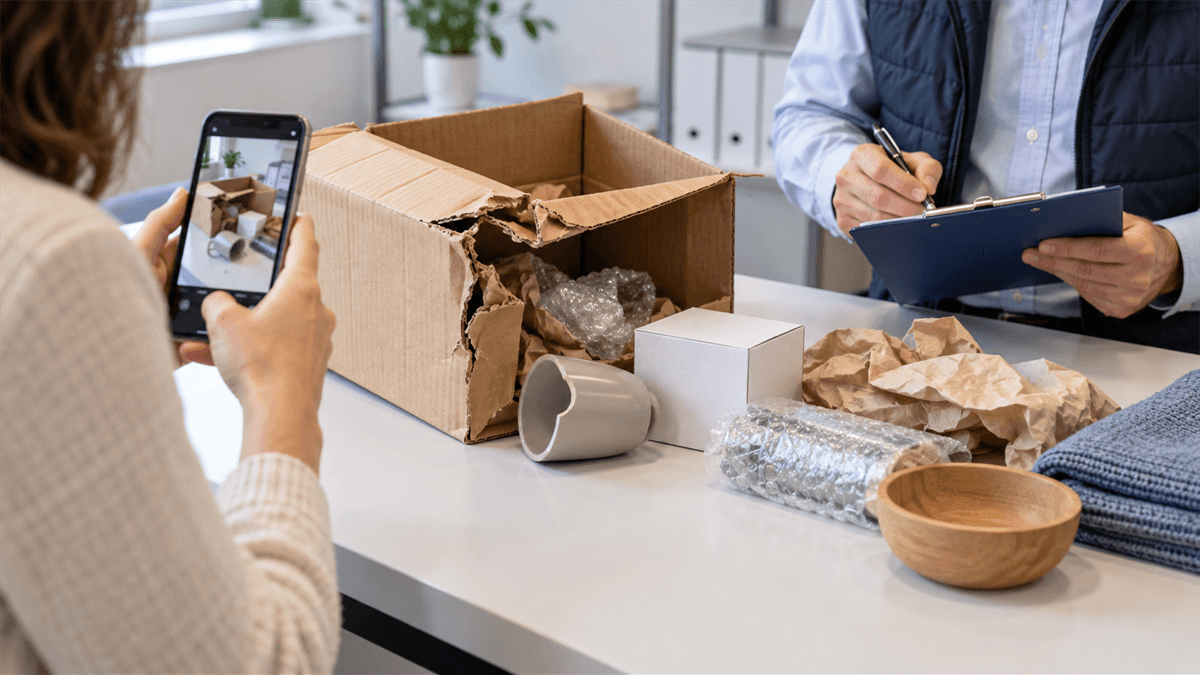
If the courier is still present, photograph all six sides of the carton, the shipping label, every seal, tear, puncture, crushed area, and layer of tape. Where the delivery process allows it, record a packaging-damage or possible-shortage reservation. Save the screen, receipt, or delivery notation showing what was reported and when.
If the parcel has already been accepted, do not discard the box, labels, inner bags, cushioning, seals, or remaining items. Do not rebuild the parcel to simulate its original condition. Copy the original video to secure storage without editing it, and preserve its file metadata. Short clips and annotated stills can explain a claim, but they should not replace the original continuous file.
DHL eCommerce Spain's official complaints guidance says that a recipient who reported damage or missing contents to the delivery driver should contact the sender. If nothing was recorded at delivery, its page instructs customers to report the issue through the form within the stated period—seven business days for international shipments—and provide the shipment reference and photographs. The correct procedure still depends on whether the shipment used DHL eCommerce, DHL Parcel, DHL Express, or another contracted product. Do not transfer a deadline or remedy from one DHL business to another without checking the actual waybill and contract.
Turn the video into a reviewable evidence packet
Start with a received-condition index. List each image or video timestamp and what it shows: unopened outer carton, label, seal, damage, opening sequence, position of inner packages, empty space, disturbed packaging, and final item count. A close-up of a tear is stronger when another image shows where that tear sits on the carton.
Create an item reconciliation table. For every ordered item, record seller, order number, quantity purchased, seller dispatch evidence, warehouse receipt, packing-list entry, and quantity received. Identify missing items precisely by description and quantity. Avoid claiming that “half the order” disappeared when the evidence can state the exact lines.
Next, build a weight chain. Request seller dispatch weight if reliable, forwarding-warehouse inbound weight, consolidated packed weight, carrier acceptance weight, later network weights where available, and a careful received-weight measurement. Record whether each figure is actual scale weight, rounded billable weight, volumetric weight, or a label declaration. Only actual measurements made on comparable bases can support a physical-weight comparison.
A weight difference can narrow an investigation window, but it is not a verdict. Scales have tolerances; packaging can be changed; labels can carry chargeable rather than actual weight; wet or damaged packaging can alter weight. State the observed difference and ask the responsible operator to reconcile it.
Build the custody chain separately: seller, China warehouse, upstream line-haul operator, export handling, customs or security examination, European distribution, DHL last mile, and recipient. For each stage, record the timestamp, location, parcel or batch identifier, and available scan, photograph, manifest, or notice. “Customs may have opened it” is not evidence of customs examination. Ask for an actual examination, resealing, retention, or release record.
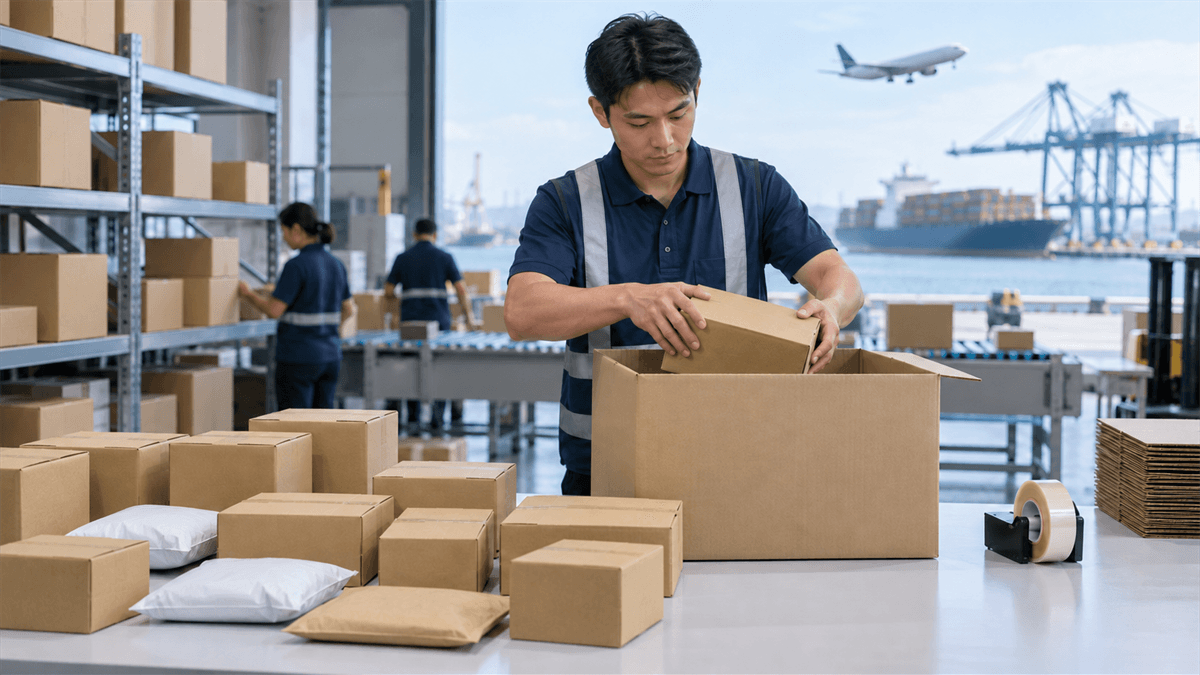
YANCHAO can provide warehouse receipt, item photographs, packed weight, packing images, and dispatch records for China-side steps it actually performs. It can help organise evidence for a carrier or insurance submission. Those records cannot determine what happened after handover, assign liability without an investigation, or guarantee acceptance or payment of a claim.
Run three consistent tracks
The sender or forwarder track should obtain the packing list, outbound images, sealing method, weight, handover evidence, upstream reference, and the correct contractual claim route. In many parcel arrangements, the party holding the carrier account or transport contract must initiate or support the claim. Ask that party for the case number and requested documents rather than assuming a recipient form is the complete process.
The DHL track should use the actual DHL product shown on the waybill. Submit the shipment number, delivery time, damage and shortage category, photographs, item list, and any delivery reservation. Save the form confirmation or case reference. If a local page instructs the recipient to contact the sender, document that instruction and send it to the contracting party.
The marketplace or insurance track should use the same factual chronology, supplemented by invoices, payment records, product value, and proof of cover. If it requires a carrier outcome later, file the initial notice before the deadline and identify the outstanding carrier document. Never change the number of missing items or the condition description to fit a channel.
Keep fact and hypothesis in separate fields. “The outer carton had a 12-centimetre opening when received” is an observation. “The item escaped through the opening” is a hypothesis until dimensions and packing position support it. “The parcel was opened by customs” is a hypothesis until an official record exists. Careful wording improves the claim because investigators can test it.
Let the evidence determine the branch
If warehouse packing images show every item and an intact seal, and a comparable physical weight later falls, the investigation should focus on the custody interval containing that change. Submit the difference without overstating its cause.
If the warehouse's own packing record omits the item, first check picking, storage, and remaining inventory. An international carrier cannot deliver an item that never entered the carton.
If an official customs examination record exists, compare the examination list, resealing method, held items, and release weight with the received condition. Customs involvement still does not automatically resolve compensation; it explains a custody event that must be reconciled.
If the carton is severely damaged but weights appear consistent, inspect whether small items could exit through the opening, whether an inner bag failed, and whether the packaging met the transport requirements. Carrier terms and insurance may treat inadequate packing differently from an external impact.
If there is no complete unboxing video, use what exists: immediate photographs, delivery records, original packaging, item list, weights, messages, and prompt notification. Explain the missing evidence honestly. A reconstructed “unboxing” damages credibility.
Prepare the claim file so another person can understand it
Use a cover page with shipment number, sender, recipient, product, delivery date, date first reported, and channels opened. Follow it with a one-page timeline, the item reconciliation, weight chain, custody table, photographs, and original-file index. Keep purchase invoices and claimed values tied to specific missing items.
Do not send only a cloud link that may expire. Follow the channel's file rules and retain a local copy of exactly what was submitted. If files are compressed, keep the originals. Record every deadline, case number, response, and requested supplement.
When a party denies responsibility, ask what factual finding or contractual term supports the decision and whether an appeal or additional-evidence route exists. A denial from one channel does not automatically decide another, but the accounts given to all channels must remain consistent.
Protect the evidence while the investigation runs
Keep the parcel and contents in a dry, secure place and restrict unnecessary handling. If the carrier requests collection or inspection, photograph the condition again immediately before handover, record the person or service receiving it, obtain a receipt, and note whether the entire package or selected evidence was taken. Never surrender the only copy of a document or digital file.
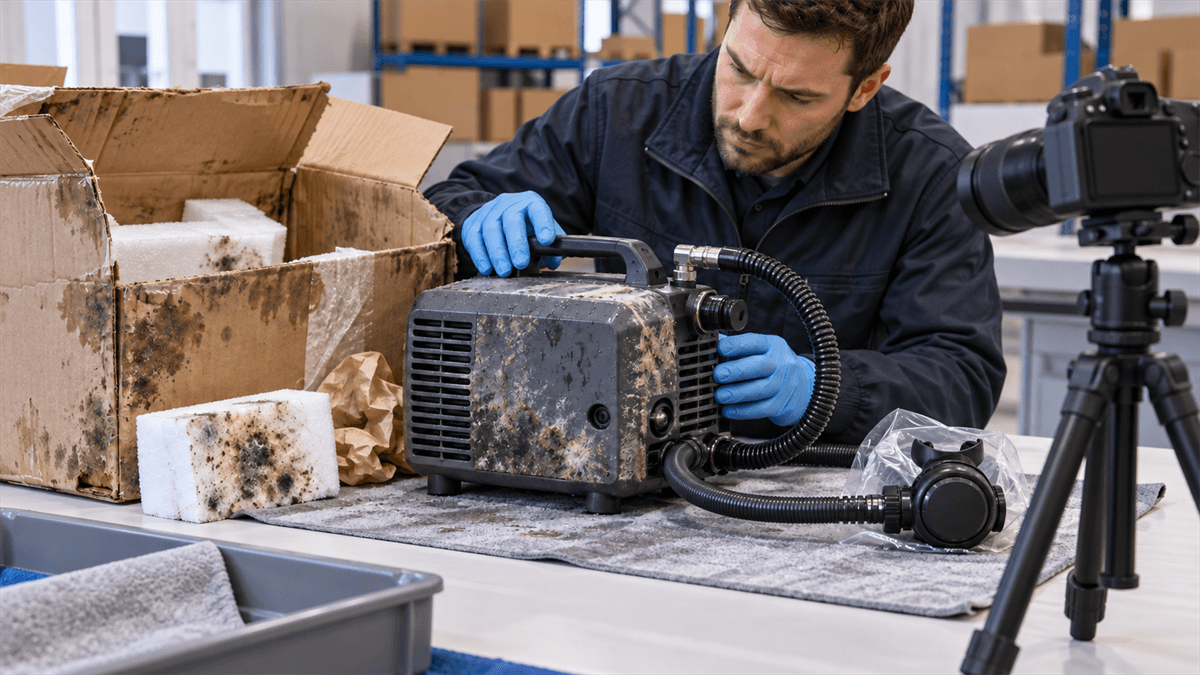
If the goods need urgent mitigation—for example, a leaking or unsafe item—ask the carrier or insurer for written instructions when practical. Safety takes priority, but document why an item had to be isolated, disposed of, or repacked and preserve photographs before changing it. Do not keep a genuinely dangerous package solely for evidentiary appearance.
Create a submission log with date, channel, sender, recipient, attachments, case number, and response deadline. When an investigator asks for “photos,” reply with an indexed set that connects each image to the item list and timeline. When asked for value, provide the invoice and proof of payment for the missing lines rather than a screenshot of a current replacement price unless the rules expressly request replacement cost.
Finally, distinguish recovery goals. The buyer may seek delivery of a found item, replacement from the seller, refund through a marketplace, carrier compensation, or insurance payment. These remedies can interact. Tell each channel about amounts already received and do not claim the same uncompensated loss twice.
FAQ: Practical Follow-up Questions
Does an unboxing video prove DHL must compensate me?
No. It can establish visible received condition and the opening sequence. Liability and compensation also depend on packing, handover, custody, weight, contract terms, and the carrier's investigation.
Can I report missing contents after accepting delivery?
Use the applicable product procedure immediately. DHL eCommerce Spain publishes a reporting route and time limit for international shipments when the issue was not noted at delivery, but the actual waybill and service determine the controlling process.
Does no extra insurance mean there is no possible recovery?
Not necessarily. Standard carrier liability, marketplace protection, and optional shipment-value cover are different mechanisms. Check the actual contract, exclusions, evidence requirements, and valuation rules rather than equating purchase price with guaranteed payment.

About the author
YANCHAO Team
Cross-Border Shipping Experts
This article is brought to you by the YANCHAO team - the people behind our self-developed warehouse platform and 5,000 m2 Huizhou facility. We help over 5 million international students and overseas shoppers ship safely and affordably from China to 100+ countries.
More about YANCHAO