
- By YANCHAO
- 2026-11-25
- Logistics News
How to Buy from Taobao in Australia: Warehouse to Sea Freight

An Australian beginner should treat a Taobao purchase as six linked stages: choose the item and seller, pay and ship to a China forwarding warehouse, inspect and separate returns, consolidate compatible parcels, choose an outbound sea route, and receive the shipment in Australia. The Chinese app, an English interface or translation can make the screen easier to read, but none of them confirms seller quality, international eligibility or the final freight bill. The safest sequence is to verify the item before payment and make the shipping decision only after the warehouse has measured the parcels.
A public r/taobao post dated November 24, 2026 came from a buyer in Adelaide who wanted clothing and asked about Chinese ordering, translation, a forwarding warehouse and sea consolidation. The post shows the information a new buyer needs; it does not establish a universal price difference between Chinese and international modes.
Stage one: choose the item before choosing the route
Check the seller's location, material description, size chart, colour, stock status, domestic dispatch promise and return terms. For clothing, save the exact size and colour. For fragile, liquid, magnetic or battery-powered goods, ask whether the chosen forwarding product accepts the item before paying. A product that can be bought inside Taobao is not automatically accepted for international transport.
Save the listing, order number, seller promise and return deadline. Translation is useful for fields and messages, but it is not a substitute for deciding whether a material description, measurement or brand claim is clear enough to buy.
Stage two: enter the China warehouse correctly
The forwarding service normally provides a Chinese domestic receiving address. Copy the recipient name, phone number, address notes and customer identifier exactly. Do not combine an Australian address with a warehouse address. Keep every seller's domestic tracking number so the warehouse can match parcels to the right account.
Confirm whether the seller charges domestic delivery and whether the warehouse accepts the destination province. The warehouse address only covers the first receiving stage; it does not mean the international route has been paid or selected.
Stage three: inspect before returning or consolidating
When a parcel arrives, match the inbound number to the warehouse record and check the photos, item count, visible condition, colour and size. If an item is wrong or damaged, preserve evidence and pause consolidation while the seller's return window is still open. Keep return parcels separate from outbound parcels so the evidence trail does not become ambiguous.
A forwarding warehouse can help record photos, dimensions and a return request. The seller and platform still decide whether a refund or replacement is accepted. Do not consolidate a disputed parcel simply because the other parcels are ready.
Stage four: decide whether consolidation helps
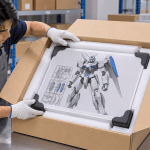
Consolidation removes repeated outer packaging, but smaller is not always safer or cheaper. Soft clothing may tolerate careful repacking. A collectible box, a hard corner or a fragile component may need protection. Ask what packaging will be removed, whether the item remains returnable, and whether reinforcement changes the final dimensions.
Compare carton count, actual weight, external length, width and height before and after consolidation. A route can calculate volumetric weight and use the higher of actual and volumetric values. The divisor, rounding rule and minimum charge are route-specific. Without packed dimensions and an Australian postcode, no responsible current sea-freight quote can be stated.
Stage five: select a sea route for the actual address
“Sea freight” is not one universal product. Confirm the named route, destination delivery scope, tax responsibility, residential or remote-area rules, prohibited categories and exception process. Enter the Australian state, city, postcode and residential or commercial status accurately. A missing postcode can change the final delivery arrangement.
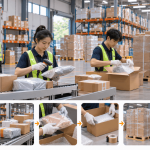
This task has no complete item list, packed measurements or destination postcode, and no live YANCHAO freight quote was available. The article therefore avoids a current price or fixed transit promise. Once parcels are in the warehouse, YANCHAO can help organize receiving records, reweighing, repacking, consolidation and tracking-number mapping. Australian customs and the carrier still control clearance and any destination assessment.
Stage six: release only after the six-field check
Before dispatch, confirm that every domestic order matches an inbound parcel; return items are separated; final carton weight and dimensions are recorded; route and tax responsibility are written down; the goods are accepted by the route; and the Australian recipient, state and postcode are correct. Keep the checkout, warehouse, inspection and outbound invoice records together.
Does translation mode change the price?
The language setting can change currency display, activity visibility or the way a page is rendered. It does not by itself prove a higher or lower price. Compare the same account, item, destination and time, and separate product cost, domestic delivery, warehouse service and international freight. If the screens differ, save both versions and ask the platform which rule applies.
When consolidation is the wrong first move
Do not consolidate when one parcel is still under a seller dispute, when the item may be prohibited, when the protective retail box is part of the product value, or when the buyer has not decided whether speed matters more than cost. A short delay for evidence and measurement can prevent a larger return or freight problem later.
A beginner's parcel ledger
Create one row for each seller order: seller name, domestic tracking number, item description, quantity, expected warehouse date, actual inbound date, inspection result, return deadline and planned outbound carton. This prevents a common failure in which several parcels arrive together and one missing item is discovered only after consolidation.
For each outbound carton, add actual weight, length, width, height, protection level and route. If a measurement changes after repacking, keep both values and record who approved the change. The ledger connects the item to the carton and the carton to the international waybill.
Payments and exchange rates
Separate the product price, China-domestic delivery, warehouse services and international freight. If the platform displays Australian dollars, keep the original yuan amount and the conversion timestamp. A currency-display difference is not evidence that the logistics route is more expensive. Do the same for coupons: a product credit may reduce the product line without reducing handling or international freight.
Receiving in Australia
Before release, confirm whether the address is residential, commercial, a parcel locker or a pickup location accepted by the route. Ask how an attempted delivery, address correction or remote-area surcharge will be communicated. Keep the international waybill, carton list and delivery instructions together. Photograph visible carton damage before opening and compare the contents with the carton list.
How to handle a first order with several sellers
Treat each seller order as a separate domestic project until every parcel is matched. One seller may dispatch quickly, another may delay, and a third may split the order. Mark each tracking number as expected, received, inspected, returned or ready for outbound release. Do not use the number of Taobao orders as a substitute for physical parcel count.
If one item is urgent, consider releasing a small parcel separately rather than holding the entire basket. That depends on the route minimum and the value of early delivery, so make the decision with warehouse measurements. Keep the reason for splitting in the ledger.
Common translation mistakes
A translated screen can blur the difference between a seller's domestic fee, a warehouse receiving fee and an international estimate. When a translation looks ambiguous, copy the original Chinese label, numeric amount and surrounding terms. Ask the provider to identify the exact service stage in plain English.
Keep a short glossary for recurring terms such as inbound, consolidation, repacking, chargeable weight and outbound release. It helps compare screens without treating a translation as a formal route term. After the first order, update the next checklist with the step that caused the most uncertainty.
The resulting workflow is deliberately slower at the beginning: verify first, measure second, consolidate third. That order protects the buyer's return options and makes a later freight comparison meaningful.
For a repeat order, keep the same ledger but add the actual outcome: which parcels arrived, what was returned, the final carton dimensions and which route documents were useful. Do not turn one successful shipment into a promise for every future order; sellers, packaging and destination rules can change.
Reviewing that record also shows whether a translation issue, a missing tracking number or a packaging choice caused the most delay. The next order can then fix the specific failure rather than adding generic services.
Frequently asked questions
Is the English mode always more expensive?
No. Interface language can change display and promotions, but only a same-input comparison can show a price difference.
Is sea consolidation always cheaper than air shipping?
No. Chargeable volume, minimum charges, packaging, delivery scope and urgency can reverse the result. Compare after the warehouse measures the shipment.
Can I consolidate if one parcel is missing?
First match the domestic tracking number and seller dispatch status. Keep the parcel unresolved until the warehouse and seller evidence explain the missing item.
常见问题
What is the correct first step for an Australian Taobao beginner?
Verify the item, seller, domestic delivery and international eligibility before sending parcels to a forwarding warehouse.
Should clothing parcels always be consolidated?
No. Consolidate only after checking return status, protection needs, final dimensions and the route's chargeable-weight rules.
Can a forwarding warehouse guarantee Australian customs clearance?
No. It can organize warehouse records and shipping data; customs and the carrier decide clearance.

About the author
YANCHAO Team
Cross-Border Shipping Experts
This article is brought to you by the YANCHAO team - the people behind our self-developed warehouse platform and 5,000 m2 Huizhou facility. We help over 5 million international students and overseas shoppers ship safely and affordably from China to 100+ countries.
More about YANCHAO