
- By YANCHAO
- 2026-08-09
- Logistics News
Import Tax from China to Australia: Cost Guide

Import tax cannot be estimated from freight alone. Import tax from China to Australia depends on the goods, tariff classification, customs value, origin evidence, importer circumstances, and current Australian rules; GST, customs duty, brokerage, biosecurity, storage, and delivery are separate cost categories. Use official Australian guidance or a licensed broker for a shipment-specific calculation. YANCHAO supports purchasing, warehouse receiving, inspection, consolidation, forwarding, and international logistics, not direct physical-product sales.
TL;DR
- Classify the product before applying any tax assumption.
- Separate government taxes from broker, port, treatment, and delivery fees.
- Treat DDP/DDU as responsibility terms, not proof of a particular tax outcome.
What an incorrect tax estimate looks like
A weak estimate multiplies the supplier invoice by a generic percentage and calls the result “landed cost.” It may omit freight and insurance treatment, currency conversion, preferential-origin evidence, GST methodology, brokerage, import processing, biosecurity examination, treatment, storage, or final delivery.
The same supplier can sell products that fall under different tariff classifications and duty treatments. Product function, material, composition, and origin matter. Current rules and rates should be verified through Australian Border Force tariff guidance and Australian Taxation Office GST guidance.
Why the final landed cost changes
First, classification determines which tariff line and conditions apply. Second, customs valuation rules determine the value used for border assessment. Third, origin can affect eligibility for a preferential duty treatment, but a Chinese shipping address alone does not prove qualifying origin.
Non-tax costs also change the total. A customs broker, freight forwarder, terminal, depot, biosecurity provider, or last-mile carrier may charge service fees. If authorities request inspection or treatment, time-related storage may accrue. The supplied YANCHAO route workbook lists parcel freight prices and transit references, but it does not provide a universal Australian tax rate; none is invented here.
How to estimate import tax step by step
- Describe the goods precisely: function, material, composition, model, and intended use.
- Ask a broker to confirm the tariff classification and applicable current duty treatment.
- Establish the customs value using the correct valuation rules and supporting invoice/payment evidence.
- Confirm how international freight, insurance, duty, and other amounts enter the GST calculation for the shipment.
- Check whether origin evidence is required for any preferential treatment.
- Add non-tax landed costs: brokerage, processing, biosecurity, port or depot, storage risk, and delivery.
- Document who pays each amount under the Incoterm and logistics contract.
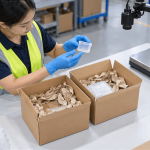
For consolidated purchases, China-side inspection helps ensure the invoice and packing list match the actual goods. YANCHAO can coordinate purchasing assistance, warehouse receipt, inspection, consolidation, and forwarding, while tax classification and import declarations remain shipment-specific compliance work.
Tax, freight, and service costs compared
| Cost category | Determined by | Paid to/through | Key check |
|---|---|---|---|
| Customs duty | Classification, value, origin, rules | Government process | Current tariff treatment |
| Import GST | Applicable Australian GST rules | Government process | Correct taxable import basis |
| Freight | Route, weight/volume, service | Carrier/forwarder | Same Incoterm and scope |
| Brokerage/processing | Declaration and service scope | Broker/provider | Itemised fee schedule |
| Biosecurity/storage | Intervention and time | Relevant providers | Product risk and free time |
The conclusion is practical: calculate taxes with verified classification and valuation, then add logistics and intervention costs separately. A freight quote marked DDP may simplify payment, but its exclusions and importer arrangement still need written confirmation.
Frequently Asked Questions
Do all imports from China attract the same Australian tax?
No. Treatment depends on the product, classification, value, origin evidence, importer circumstances, and current rules. A single percentage cannot safely represent every shipment.
Is shipping included when calculating import GST?
The GST basis for a taxable import can include more than the supplier’s product price. The exact calculation should follow current ATO and ABF guidance and be confirmed for the shipment.
Does DDP mean no import tax is due?
No. DDP allocates responsibility between contracting parties; it does not mean the government imposes no tax. The provider’s quote should state which assessed taxes and fees are included and which events are excluded.
Summary
Import tax from China to Australia must start with verified product classification, customs value, origin, and current rules. Government taxes are only part of landed cost; brokerage, biosecurity, storage, freight, and delivery must be modelled separately. Use official ABF and ATO sources plus a licensed broker, and require written DDP/DDU scope before treating any logistics quote as tax-inclusive.
Get the Australia Landed-Cost Worksheet
Request a worksheet that separates invoice value, freight, insurance, duty, GST, brokerage, biosecurity, storage, and delivery. For purchasing assistance, China warehouse receiving, inspection, consolidation, forwarding, or logistics coordination, send YANCHAO a DM with the exact product and Australian delivery details.

About the author
YANCHAO Team
Cross-Border Shipping Experts
This article is brought to you by the YANCHAO team - the people behind our self-developed warehouse platform and 5,000 m2 Huizhou facility. We help over 5 million international students and overseas shoppers ship safely and affordably from China to 100+ countries.
More about YANCHAO