Tag: International Shipping

Shipping from China to Thailand: Freight Forwarder Tips & Customs Guide | GeeseNest

GeeseNest: Know About Shipping from China to Thailand

Thailand, known for its open-market economy, has emerged as one of the “Four Asian Tigers” and a rising industrial power. Its strong manufacturing, agriculture, and tourism sectors contribute to its growing demand for cross-border transportation. As China remains a key trading partner, many Chinese exporters and e-commerce sellers are seeking reliable ways to ship goods to Thailand.

In this shipping guide, GeeseNest summarizes key customs policies, major ports, and shipping channels for both general and sensitive goods, helping sellers select the right route and calculate costs using the Shipping Calculator.

GET N TOUCH

Get the Best Freight Routes Intelligence

Key Ports in Thailand for Imports from China

Thailand’s major seaports include:

  • Bangkok (BKK)
  • Laem Chabang
  • Lat Krabang (dry port)

Shipping from China to Thailand by sea typically takes 4–8 days, with carriers such as APL, CMA, CNC, and MCC operating direct routes. These options are suitable for bulk shipments and offer competitive pricing.

Thailand’s Import Regulations Overview

Thailand adopts a relatively liberal import policy. Most goods can be freely imported. In recent years, many import licensing and quantity restrictions have been eliminated. However, some categories still require control:

1. Tariff Quotas (TRQs)

Thailand enforces tariff quotas on 23 agricultural products, including:

  • Longan, coconut meat, milk/cream, garlic, chili, rice, soybeans, tea, palm oil, etc.
    Goods from ASEAN countries are typically exempt from TRQs.

2. Import Bans and Licensing

Thailand’s Import and Export Act (1979) authorizes the Ministry of Commerce to prohibit or restrict imports under special conditions, such as:

  • Public safety
  • National security
  • Economic stability

Sensitive items may require non-automatic import licenses, and licensing details are published via government bulletins and the Bank of Thailand.

Thailand Import Customs Clearance Process

  1. Import Declaration Filing
    • Manually or via EDI (Electronic Data Interchange)
  2. Supporting Documents
    • Bill of lading (B/L) or airway bill (AWB)
    • Commercial invoice (3 copies)
    • Packing list
    • Insurance invoice
    • Release form
    • Foreign exchange declaration (if value > 500,000 THB)
    • Import license
    • Certificate of origin (CO) and product specs
  3. Customs Inspection
    Thai customs authorities review documentation, verify declared value, apply tariff rates, and may inspect physical goods as per customs inspection protocols.
  4. Duties & Tax Payment
    Four payment methods:
    • On-site at customs office
    • Through BAHTNET (Bank of Thailand system)
    • Bangkok Bank teller system
    • EDI-based bank transfer
  5. Inspection & Release
    Final step involves customs clearance and physical verification. If compliant, goods are released to the importer.

GoNest Shipping Options from China to Thailand

GeeseNest offers multiple air and land freight services to Thailand, supporting both general and sensitive cargo categories such as cosmetics, powdered substances, and electronics.

Shipping RouteCargo TypeBase PriceAdditionalWeight Limit
Thailand Land Freight (General Line)General goods¥240/11kg¥22/kg11–65kg
Thailand Land Freight (Sensitive Line)Sensitive goods: food, health/beauty products, entertainment items¥308/11kg¥28/kg11–65kg

Note: Volume-to-weight ratio capped at 6000. Max dimensions (cm): 0-120/0-70/0-250

For detailed calculations, GeeseNest offers an online Shipping Calculator that helps estimate costs and delivery time based on parcel weight and item type.

Final Thoughts from GeeseNest

Thailand’s growing demand for Chinese goods creates enormous potential for e-commerce sellers and global traders. Understanding customs regulations, using the right shipping channels, and working with a trusted freight forwarder like GeeseNest ensures smoother cross-border transportation.

Need help with sensitive cargo or clearance issues? Reach out to GeeseNest’s logistics experts today for a customized shipping solution to Thailand.

GET IN TOUCH
Let us Send You a Quote

Shipping from China to Italy | Freight Forwarder & Shipping Guide 2025

Shipping from China to Italy: What You Need to Know

Italy, located in southern Europe, continues to be a major destination for Chinese exports. With its unique geography consisting of the Apennine Peninsula and the islands of Sicily and Sardinia, shipping to Italy presents both opportunities and specific logistical considerations. As a trusted Freight Forwarder, GeeseNest provides clarity on costs, shipping options, delivery times, and customs requirements for businesses shipping from China to Italy.

Popular Shipping Methods from China to Italy

When choosing the right shipping method, the nature of your goods matters. Here’s a quick Shipping Guide:

  • For general goods like clothing: UPS or DHL is typically preferred.
  • For cosmetics, brand-name items, or food: EMS is a safer choice.
  • For sensitive goods: Work with a logistics provider like GeeseNest that specializes in handling sensitive cargo such as liquids, powders, and cosmetic products. These shipments often require special packaging and compliance with international shipping regulations.

Important Note: Avoid shipping leather shoes to Italy—customs duties are high and clearance issues are common.

GoNest Air Freight Solutions to Italy (1KG reference)

To provide a real-world Shipping Calculator reference, here are current GoNest air freight solutions for shipping 1KG of goods to Italy:

Shipping MethodDelivery TimeBase Weight FeeAdditional Weight FeeEstimated Total (1KG)
Europe Air General Cargo Line8–15 days¥135.00 / 0.5kg¥40.00 / 0.5kg¥175.00
Europe Air Freight Line (Non-Volumetric)8–15 days¥150.00 / 0.5kg¥45.00 / 0.5kg¥195.00
Europe Air Special Cargo Line8–15 days¥135.00 / 0.5kg¥42.50 / 0.5kg¥177.50

💡All lines include:

  • Free Insurance
  • DDP (Delivered Duty Paid)
  • Door-to-Door Delivery

Our flexible shipping lines ensure timely delivery and full customs clearance, making them ideal for small parcel Cross-border transportation.

Estimated Costs: What Does It Cost to Ship to Italy?

Here are common shipping cost estimates from China to Italy:

  • Electric scooters via Europe special line: approx. ¥60/kg, 6–10 days
  • Clothing via UPS: First 1KG at ¥100, each additional 0.5KG at ¥25
  • Battery products via UPS: Approx. ¥300 for 1KG, 6–8 days
  • Hoverboards via UPS: ¥50/kg + ¥120/unit for duty, 6–8 working days
  • Sensitive goods like cosmetics via DHL: Around ¥66/kg, 3–7 days

These rates may fluctuate based on freight type and customs inspection results.

Will I Be Taxed When Shipping to Italy?

Customs duties depend on the declared value of the goods. Generally, if declared properly, most parcels pass through customs without additional taxes.

EU Import Threshold: €22
VAT Formula:
VAT = (Declared Value + Shipping Cost + Duties) × 19%
Duty Formula:
Duties = (Declared Value + 70% of Shipping) × Product Tariff Rate

Examples of Italian customs tariffs:

  • Knitwear: 10.5%
  • Woven apparel: 12%
  • Bags: 3%
  • Eyewear: 2.2–2.9%
  • Footwear: 8%
  • Toys: 4.7%

Italy follows EU import policies but applies specific regulations for product safety and hygiene inspections.

Pro Tips from GeeseNest

  1. Always use a reliable Freight Forwarder familiar with shipping sensitive goods to the EU.
  2. Use our Shipping Calculator to estimate costs based on package weight, category, and urgency.
  3. For high-risk or regulated items, consult our team directly to avoid customs delays or returns.

Want a smooth, tax-cleared, and affordable delivery to Italy? Get in touch with our logistics team or use our free quote system online!

GET IN TOUCH

Let us Send You a Quote

Real Cases of Trade Fraud in Exports from China to Uganda

As international trade continues to expand, more Chinese enterprises are entering overseas markets—particularly Africa. However, fraudulent schemes targeting Chinese exporters are increasingly common, especially in the China-Uganda trade corridor. These scams exploit gaps in international logistics and payment systems, leading to cargo losses, port detentions, and significant financial damage.

This article presents real-life fraud cases and outlines common tactics used by scammers. It also offers actionable strategies to help businesses reduce the risks involved in international logistics and cross-border trade with Uganda.

Common Fraud Tactics in the Uganda Trade Route

1. Registering Fake Intermediaries Using Reputable Names

Scammers often register companies in Uganda under the name of well-known foreign or local enterprises. They forge documents, seals, and employee identities to deceive Chinese exporters and sign fake contracts.

2. Encouraging High-Risk Payment Methods (e.g., O/A)

Fraudsters exploit exporters’ eagerness to enter new markets by suggesting open account (O/A) payment terms, where payment is delayed until after goods are received. Once the goods arrive, the buyer disappears without paying.

How Chinese Exporters Can Prevent International Trade Fraud

To protect against such scams, businesses should:

  • Use secure payment methods, such as letters of credit or advance payments;
  • Verify buyer credentials via multiple channels, including direct contact with the company’s headquarters;
  • Investigate intermediaries thoroughly before shipping;
  • Collaborate with Chinese embassies or commercial offices abroad to verify suspicious transactions;
  • Act quickly in case of fraud and retain transaction records for legal recourse.

Case Studies (Provided by GoNest Logistics)

Case 1: $530,000 Shipment Held Due to Forged Contract

Company A signed a $530,000 sodium hydroxide deal via Ugandan intermediary SAT with “AGCA South Africa.” Payment was O/A 30 days. After delivery, the buyer disappeared. Nineteen containers were moved to Uganda, and nine were detained at Mombasa port. AGCA later confirmed no factory or personnel in Uganda—SAT was a fake intermediary.

Case 2: Suspicious Account Change Prevents Fraud

Company B signed a $136,000 deal with UFM via intermediary CAL. After delivery, the intermediary requested changes to the bank account on the bill of lading. This raised red flags. Official UFM denied the transaction—proving it was fraud.

Case 3: Embassy Investigation Uncovers Fake Buyers

Company C requested verification of UFM and AE buyers via the Chinese embassy in Uganda before shipment. Both addresses were invalid or frequently changed. UFM later confirmed the contract was forged.

Case 4: Impersonation of a Real Company for Scam

Company D signed a $134,000 paraffin wax deal with MIL via BL. Two months later, MIL’s real manager contacted D, saying they had never signed a contract. All documents were forged.

Case 5: Forged Signatures and Identity Theft

Company E signed a contract with a supposed African customer from THEL. Upon suspicion, E contacted the real THEL headquarters, which confirmed it had no branch in Uganda and never authorized the transaction.

Conclusion: Strengthening Controls in International Logistics

International trade, especially in emerging markets like Uganda, presents both opportunities and risks. Chinese exporters must adopt comprehensive risk control strategies—from vetting partners and verifying contracts to choosing safe payment options and managing China-to-Uganda shipping logistics. Proactive measures can reduce the risk of trade fraud, helping businesses grow safely on the global stage.

GET IN TOUCH

Looking for a trustworthy international trade transportation partner

GeeseNest: Best Freight Forwarder from China to India

Shipping goods between China and India has become increasingly essential for businesses. Whether you’re importing products or managing supply chains, finding the best freight forwarder from China to India can save you time, money, and hassle. Choosing the right partner helps ensure your shipments arrive on time and in great condition.

Understanding Freight Forwarding

Freight forwarding is the process of arranging shipments for individuals or companies. Freight forwarders act as middlemen, coordinating the transportation of goods from origin to destination. They manage logistics, paperwork, customs clearance, and delivery, making international shipping much simpler for businesses.

These experts know the ins and outs of cross-border shipping and help navigate the complex rules between China and India. Their role is crucial in handling shipments efficiently and avoiding delays.

Key Shipping Services from China to India

China to India shipping services include several transport options. The common methods are sea freight, air freight, and ocean freight. Each has its own benefits depending on your shipment size, budget, and urgency.

Sea freight is ideal for large or heavy cargo but takes longer. Air freight is faster but costs more. Ocean freight generally refers to bulk sea shipments handled over international waters, offering cost-effective options for big volumes.

Understanding the differences can help you pick the right service.

GeeseNest: How much does it cost to ship to India?

Sea Freight from China to India

Sea freight is popular for moving bulk cargo like machinery, raw materials, or wholesale goods. It offers lower rates per unit of weight compared to air transport.

Ocean freight from China involves loading containers onto ships that follow established sea routes. These vessels sail to major Indian ports such as Mumbai, Chennai, or Kolkata. Timelines typically range from 20 to 40 days depending on the route and shipping company.

Using sea freight from China to India is a great solution when you have flexible delivery schedules and large volumes to ship.

Air Freight from China

Air freight is favored when speed is crucial. It’s perfect for perishable items, urgent parts, or samples.

While air shipping costs more, the reduced transit times can boost your business responsiveness. Flights from major Chinese airports to India’s main hubs like Delhi and Bangalore operate regularly.

You should choose air freight over sea when deadlines are tight or the shipment size is small.

Choosing the Best Freight Forwarder from China to India

Selecting the best freight forwarder comes down to several factors. Cost is important, but so is reliability. You want a company known for handling shipments safely and delivering on time.

Transit time varies between providers, so ask for estimated schedules. Good freight forwarders also manage customs efficiently, ensuring all paperwork is accurate to avoid border delays.

Customer support matters as well. A freight forwarder who provides clear tracking and answers your questions quickly makes the shipping process less stressful.

Managing Cargo Shipping from China to India

Proper packaging and labeling are essential. Goods must withstand long transportation and handling. Use sturdy materials and clearly mark contents for customs.

Insurance protects your shipment from potential damage or loss. Discuss available coverage options with your freight forwarder.

A few tips can improve your cargo shipping experience: plan ahead, keep communication open with your forwarder, and double-check all documentation.

Real-life Examples and Customer Testimonials

Many businesses rely on top freight forwarders to connect China and India smoothly. For instance, a textile company saved 15% on shipping costs by switching to a freight forwarder specializing in ocean freight from China.

Another electronics startup praised their forwarder’s air freight service, noting deliveries arrived on schedule, allowing faster product launches.

Customer reviews often highlight the importance of responsive support and transparent pricing when choosing a freight forwarder.

Conclusion

Finding the best freight forwarder from China to India is key to successful international shipping. Knowing your options between sea or air freight, understanding costs, and evaluating service quality can make a big difference.

Take time to research and compare freight forwarders. The right partner will help your business grow by ensuring your cargo moves efficiently and safely between the two countries.

Remember, good freight forwarding is not just about moving goods – it’s about building trust and reliability in your supply chain.

Start your search today to experience smooth China to India shipping services tailored to your needs.

Ideal for overseas Chinese, UK-based shoppers, and cross-border traders.

GeeseNest: Best Freight Forwarder from China to UK

When it comes to international shipping, choosing the best freight forwarder from China to the UK is crucial. Whether you’re a student, a small business owner, or someone who simply loves shopping from China, you need a reliable partner that offers transparency, efficiency, and affordability. GeeseNest is your go-to freight forwarding solution, offering exceptional service and smooth logistics for cross-border shipping.

GET N TOUCH

Get the Best Freight Routes Intelligence

Who Should Use GeeseNest Services?

GeeseNest isn’t a one-size-fits-all solution. It is tailored for specific groups who frequently ship goods from China to the UK:

1. Overseas Chinese and International Students

Overseas Chinese living in the UK or studying abroad often shop on platforms like Taobao, JD.com, and Pinduoduo. GeeseNest provides a seamless solution to consolidate, repack, and ship these goods directly to your UK address, offering door-to-door delivery with DDP (Delivered Duty Paid) and free insurance.

2. British Consumers Who Love Chinese Products

From gadgets and electronics to traditional Chinese goods, many British consumers seek affordable and high-quality products from China. GeeseNest helps eliminate the hurdles of international shipping, customs, and import duties.

3. Cross-Border Traders and E-Commerce Sellers

If you’re running a Shopify store, TikTok Shop, eBay, or any other cross-border business, GeeseNest’s bulk shipping discounts and reliable delivery timeframes make it the ideal logistics partner. Our 15kg and 30kg sea freight options are cost-effective and reliable.

4. Micro Sellers and New E-Commerce Entrepreneurs

Starting a small business or side hustle? GeeseNest offers flexible shipping methods with no minimum order restrictions. Our fast processing, package consolidation, and real-time tracking support your growth from day one.

Why Choose GeeseNest as Your Freight Forwarder from China to the UK?

Strategic Warehouse in Huizhou, China

Although we don’t operate a UK warehouse, our central hub in Huizhou, Guangdong, ensures fast domestic processing, organized repacking, and optimized freight management for all shipments.

Strong Parent Brand: GoNest

GeeseNest is proudly part of the GoNest Group, with its official e-commerce platform (GoNest.go) currently under development. This integration empowers us to serve both shopping and logistics needs under one trusted umbrella.

Comprehensive Logistics Solutions

We offer a full spectrum of services, including:

  • Air Freight (6–12 days): Fast delivery for urgent or lightweight shipments
  • Bubble-Free Air Freight: Ideal for electronics or fragile items
  • Sea Freight (45–60 days): Bulk discount options starting from 15kg
  • All lines include DDP, door-to-door delivery, and free insurance

Transparent Pricing Examples

Shipping MethodAvg. Delivery TimeBase Weight PriceAdditional Weight PriceEst. Cost for 1kg
Special Goods Air Line6–10 days£80.00/0.5kg£41.00/0.5kg£121.00
UK Air Special Cargo7–12 days£60.00/0.5kg£36.50/0.5kg£96.50
UK Air Freight Bubble-Free7–12 days£90.00/0.5kg£50.00/0.5kg£140.00
UK Sea Freight (15kg Bulk Discount)45–60 days£480.00/15kg£32.00/kg£480.00
UK Sea Freight (30kg Bulk Discount)45–60 days£900.00/30kg£30.00/kg£900.00

All prices include free insurance, DDP, and door-to-door service.

GET N TOUCH

Get the Best Freight Routes Intelligence

Key Benefits of GeeseNest

  • End-to-end Tracking: Stay informed with real-time parcel tracking.
  • Clear Documentation Support: We help you handle customs invoices and packaging lists.
  • No Hidden Fees: Transparent pricing with full breakdown before you pay.
  • Excellent Customer Support: English and Chinese-speaking staff available via WhatsApp and WeChat.

GeeseNest is more than just a shipping service — we are a trusted partner for overseas Chinese, UK-based consumers, and global entrepreneurs who rely on seamless logistics between China and the UK. Our affordable pricing, professional service, and powerful parent brand make us the best freight forwarder from China to UK.

Start shipping smarter today with GeeseNest — your trusted China-to-UK logistics partner.

ost-effective sea and air freight solutions for shipping from China to the US

How to Calculate International Shipping Costs

In international logistics, understanding how shipping fees are calculated is crucial for businesses and individuals alike. Before diving into fee calculation, we first clarify some key concepts.

Types of Weight

International express charges are typically based on weight, which can be categorized into:

  • Actual Weight: The total weight of the shipment including packaging, also known as gross weight.
  • Volumetric (Dimensional) Weight: For shipments that are large in volume but light in weight, carriers convert volume into equivalent weight to optimize space utilization. Such shipments are often called “light and bulky”.
  • Chargeable Weight: The weight used to calculate shipping fees, usually the greater of actual weight and volumetric weight.

Unit of Chargeable Weight

In international express shipping, the minimum chargeable weight unit is generally 0.5 kg, meaning weights are rounded up in increments of 0.5 kg.

Base Weight and Additional Weight

Shipping fees are divided into base (first) weight and additional (continuation) weight fees. The first 0.5 kg or 1 kg counts as the base weight with a set fee, while every subsequent 0.5 kg or 1 kg is charged as additional weight. Typically, base weight fees are higher than additional weight fees.

Packaging Fees

Most express companies provide free packaging materials such as boxes and bubble wrap. However, for fragile or valuable items requiring special packaging, additional packaging fees may apply. These fees are not subject to discounts.

Remote Area Surcharge

Shipments sent to remote locations incur extra charges known as remote area surcharges.

Example (DHL remote fee):

  • Below 50 kg (minimum): 180 × (1 + fuel surcharge rate) ¥
  • Above 50 kg: 3.6 × weight (kg) × (1 + fuel surcharge rate) ¥

Customs Clearance Fees

For example, UPS charges customs clearance fees as follows:

  • Up to 300 kg: 200 HKD
  • Above 300 kg: 200 HKD + (weight – 300 kg) × 6.8 HKD

General Freight Calculation Formula

A) For shipments where actual weight > volumetric weight

Shipping cost = base weight fee + (weight (kg) × 2 – 1) × additional weight fee

Example: A 7 kg shipment with base fee ¥20 and additional fee ¥9 results in total:
20 + (7 × 2 -1) × 9 = ¥137

B) For shipments where volumetric weight > actual weight

Calculate volumetric weight first:

  • Regular shape: Length(cm) × Width(cm) × Height(cm) ÷ 6000 = volumetric weight (kg)
  • Irregular shape: Longest(cm) × Widest(cm) × Highest(cm) ÷ 6000 = volumetric weight (kg)

Then apply the same formula as above.

Fuel Surcharge

International express often adds a fuel surcharge, usually calculated together with the freight fee and sometimes discounted.

For example, if fuel surcharge is 9%, total cost = freight cost × (1 + 9%)

Total Cost Formula

Total cost = (Freight + Fuel Surcharge) × Discount + Packaging Fees + Other fees (customs clearance, remote area surcharge, etc.)

Special Notes on EMS

EMS charges only by actual weight and does not apply fuel surcharges or customs clearance fees.

Volume Weight Calculation Differences for Air and Express Freight

  • Express freight volume weight = Length(cm) × Width(cm) × Height(cm) ÷ 5000
  • Air freight volume weight = Length(cm) × Width(cm) × Height(cm) ÷ 6000

GoNest Shipping Cost Calculation Example for USA Routes

To better illustrate GoNest’s shipping cost structure from China to the US, here are two common shipping routes and their pricing details based on a 10 kg shipment.

Ready to ship from China to the US

Contact GoNest today for a personalized freight forwarding quote and seamless shipping experience!

A) US Economy Sea Freight General Goods Line

  • Base Weight Fee: ¥129.00 (1kg included)
  • Additional Weight Fee: ¥28.00 per kg
  • Billing Rule: Base weight 1 kg, additional by 1 kg increments
  • Example: 10 kg shipment = 129 + (10 – 1) × 28 = ¥381.00
  • Supported Goods: General goods

This sea freight option is cost-effective for non-urgent shipments, providing affordable shipping from China to the US.

B) US Air Freight Special Goods Dedicated Line [Express]

  • Base Weight Fee: ¥171.00 (0.5kg included)
  • Additional Weight Fee: ¥59.00 per 0.5kg
  • Billing Rule: Base weight 0.5 kg, additional by 0.5 kg increments
  • Example: 10 kg shipment = 171 + ((10 – 0.5) ÷ 0.5) × 59 = ¥1292.00
  • Supported Goods: Special goods requiring expedited delivery

This air freight service offers a faster delivery option from China to the US, ideal for urgent or valuable shipments.

Why Choose GoNest Freight Forwarder from China to US?

GoNest specializes in providing transparent, competitive shipping rates combined with reliable service across major shipping routes including air freight and sea freight from China to the US. Whether you need economical sea freight for bulk cargo or fast air freight for time-sensitive goods, GoNest can tailor solutions to fit your needs.

Master the FOB Export Process with Our Complete Step-by-Step Guide

FOB Export Operation Procedure (From China)

1. Customer Communication and Order Confirmation

1. Customer Inquiry
Before placing a formal Purchase Order, customers usually submit an Order Inquiry to understand product details.

2. Quotation
The sales department provides a Proforma Invoice based on product name, model, manufacturer, quantity, delivery time, payment terms, packaging specifications, and container type.

3. Order Confirmation
After negotiation, the customer issues an official Purchase Order.

4. Production Order Placement
Once the order is confirmed, the factory is instructed to begin production.

2. Internal Review and Production Notification

5. Business Approval Process
The salesperson fills out an Export Contract Review Form, listing all estimated costs. Attachments should include the customer order and the supplier’s contract. The approval process goes through:
Salesperson → Department Manager → Administration → (if needed) General Manager.
After approval, a sales order is created for tracking.

6. Production Notice
Production notice is issued when the following are confirmed:

  • For L/C payments: Confirm receipt and review of the L/C one month before shipment.
  • For T/T payments: Confirm deposit has been received.
  • For credit accounts (e.g., D/A): Requires managerial confirmation.

3. Pre-Shipment Preparation and Documentation

7. Inspection Arrangement

  • Internal inspection: Schedule one week before shipment.
  • Customer inspection: Schedule in advance and notify planning department.
  • Third-party inspection: Contact inspection agency two weeks in advance.

8. Basic Document Preparation
Based on packing info provided by the factory, prepare export contracts, commercial invoices, and packing lists.

9. Commodity Inspection
For regulated products, inform the factory of inspection requirements and provide necessary documents. Ensure the factory knows the port of export to facilitate inspection certificate issuance.

4. Booking and Logistics

10. Space Booking

  • For FOB CHINA contracts: Contact the customer’s designated freight forwarder early to confirm port, vessel schedule, and ensure the factory can meet the timeline.
    Submit booking confirmation (ING ORDER) two weeks before shipment.
  • If the seller pays for freight: Research vessel schedules, prices, and select a suitable shipping line.
  • For LCL shipments: Book LCL space, confirm customs cutoff and warehouse requirements.
  • All bookings should be confirmed in writing with full shipment details.

11. Container Trucking Arrangement

  • After inspection, arrange container pickup. Provide complete loading instructions, including booking confirmation, container type, pickup address, and customs broker.
  • Notify the factory of container schedule and request shipping notification post-loading.
  • Record container and seal numbers for the Bill of Lading (B/L).

12. Customs Declaration
Submit documents and container info to the customs broker and ensure clearance at least two days before the vessel’s cutoff date.

5. Transport and Export Documentation

13. Obtain Shipping Documents

  • Within two days after departure, submit B/L details to the shipping line or forwarder.
  • Confirm draft B/L and charges. If required by the customer, send B/L draft for approval.
  • Pay freight charges and collect the original B/L and related documents.

14. Prepare Other Export Documents

  • Commercial Invoice: Must match the L/C terms and be dated after L/C issuance and before shipment.
  • Certificate of Origin (FORM A or General CO): Apply before shipment, and ensure transport dates are compliant.
  • Shipping Advice: Send shipment details (vessel name, ETA, value, packaging, marks, etc.) shortly after departure.
  • Packing List: Clearly indicate quantity, weight, volume, and match B/L data.

6. Document Handling and Post-Shipment

15. Document Submission

  • L/C: Submit all required documents for negotiation within the allowed time.
  • T/T: Fax B/L to the customer upon receipt, send original upon confirmation of balance payment.
  • T/T Prepaid: Ensure full payment is received before container pickup and send B/L thereafter.

16. Business Recordkeeping
Each completed export order should be recorded digitally and on paper for tracking and analysis.

17. Document Filing
All original L/C and negotiation documents must be archived for future reference.

18. Market Intelligence
The documentation team should continuously monitor freight rates, sailing schedules, and routes to support accurate quotations.

GET IN TOUCH

FOB Export Made Simple

FOB Price Meaning

FOB Price Meaning and Cost Breakdown

What Is FOB (Free On Board) in International Trade?

FOB, short for Free On Board, is one of the most commonly used Incoterms in global trade. Under FOB terms, the seller is responsible for delivering the goods to the port of shipment and loading them onto the buyer’s designated vessel. Once the goods pass the ship’s rail at the loading port, all risks, shipping costs, and insurance responsibilities transfer to the buyer.

The FOB price does not include international freight or insurance—it reflects only the seller’s cost of delivering the goods up to the vessel at the port of origin.

2. Seller’s Responsibilities Under FOB Terms

When using FOB shipping terms, the seller must:

  • Arrange and cover domestic transport to the port of loading;
  • Clear export customs formalities;
  • Load the goods onto the buyer’s nominated vessel;
  • Notify the buyer with shipping details in time.

The risk transfers to the buyer once the goods are loaded on board at the port of shipment.

3. FOB Shipping Cost Breakdown

A frequent issue in FOB shipping is the miscalculation of costs, especially overlooking local port charges.

A complete FOB shipping cost breakdown should include:

FOB Price = Domestic Transportation Fee + Local Port Charges + Product Cost

Some exporters mistakenly treat FOB as if it were EXW (Ex Works) pricing and omit local port fees from their quote. This can significantly reduce profit margins—sometimes by the exact amount that would’ve been the seller’s expected profit.

4. Risks of Buyer-Designated Freight Forwarders

Under FOB terms, the buyer must nominate a freight forwarder, which can create pricing and logistics challenges for the seller.

In many cases, buyer-nominated forwarders charge higher fees than the seller’s own shipping partners. If the seller is unaware of these fees when providing the quote, this can result in unexpected cost overruns and lost profits.

To prevent this, sellers should:

  • Ask for the buyer’s freight forwarder contact details immediately after confirming FOB terms;
  • Request a breakdown of port charges for that specific shipment;
  • Factor this information into their final pricing quote.

5. CIF Is Not Truly “Delivered at Destination”

Many traders wrongly refer to CIF (Cost, Insurance and Freight) as a “landed price” or “delivered price”, but this is incorrect.

The real “delivered at destination” term under Incoterms is DES (Delivered Ex Ship). Under DES, the seller bears all transportation risks and costs until the goods arrive on the vessel at the destination port. However, under CIF, the seller’s responsibility ends once the goods are loaded at the port of origin.

Example:

If a vessel sinks after leaving the loading port under CIF terms, the buyer bears the risk and must claim insurance. The seller has no liability because the goods were successfully loaded. This proves that CIF does not mean the seller guarantees safe delivery to the destination port—only that insurance coverage is included.

6. How to Prevent FOB Shipping Losses and Fraud

A common concern under FOB is the risk of “release without original bill of lading” (i.e., unauthorized cargo release by the buyer’s freight forwarder).

To prevent such risks:

  • Secure the original bill of lading (OBL) and only release it upon payment;
  • Use secure payment methods like Letter of Credit (L/C) or Documents Against Payment (D/P);
  • Establish trust only with verified freight forwarders and always verify fees in advance.

GET IN TOUCH

Transport goods from China

Conversion Among FOB, CFR and CIF prices

Conversion Among FOB, CFR and CIF prices

What Are Trade Terms?

Trade terms, also known as price terms, are concise expressions used in international trade contracts to clearly define the allocation of costs, risks, and responsibilities between buyers and sellers during the delivery process. They form a crucial part of international pricing and contract terms.

These trade terms specify who is responsible for transportation, insurance, customs clearance, loading, and unloading, making them essential knowledge for export, import, and international freight operations.

Major International Conventions on Trade Terms

The main internationally recognized conventions on trade terms include:

  • A. Warsaw-Oxford Rules 1932 (W.O. Rules 1932)
  • B. Revised American Foreign Trade Definitions 1941
  • C. Incoterms 2000 by the International Chamber of Commerce (ICC)

Among these, Incoterms (International Commercial Terms) established by the ICC (International Chamber of Commerce) are the most widely accepted and applied global standards.

China became a member of the ICC in November 1994.
Both Incoterms 1990 and Incoterms 2000 are extensively used worldwide, especially in international trade contracts and letters of credit (L/C).

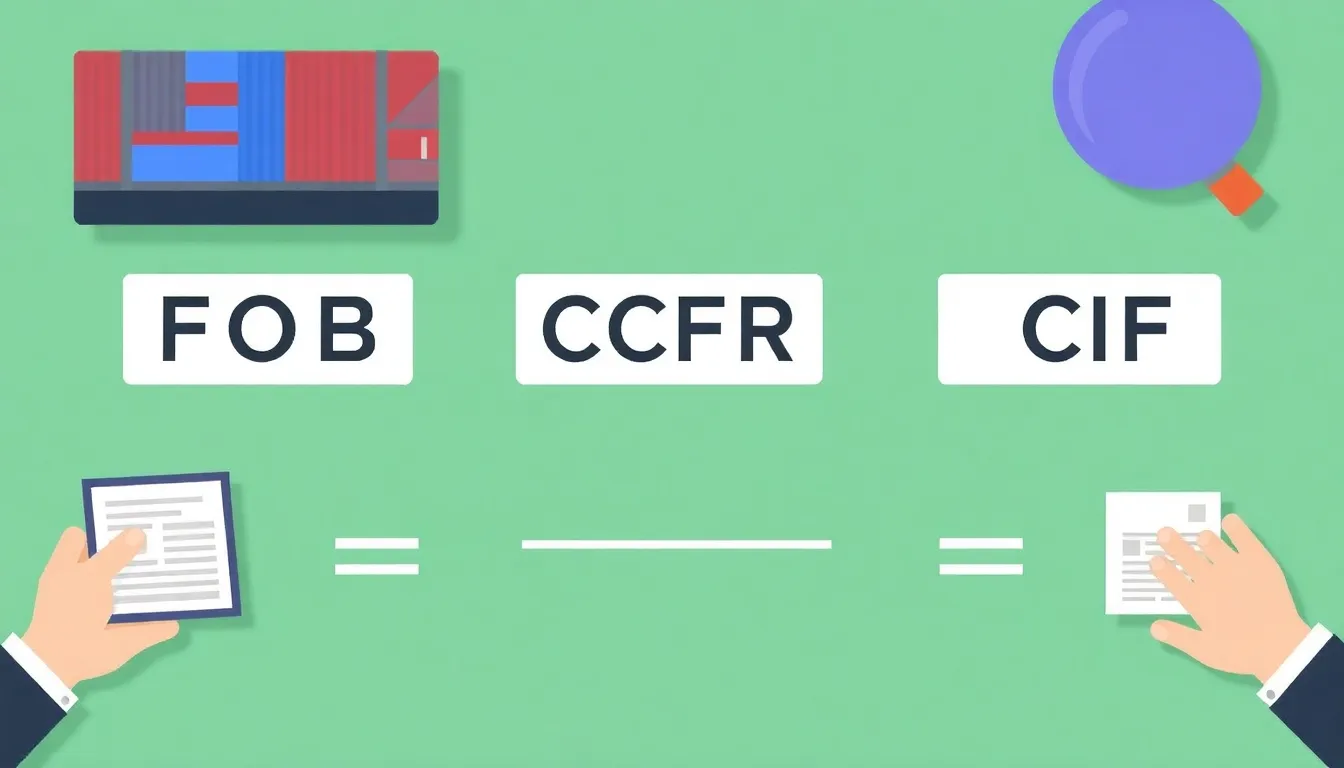
Definitions and Meanings of Common Trade Terms: FOB, CFR, and CIF

(1) FOB (Free on Board)

FOB price means the seller is responsible for all costs and risks until the goods are loaded on the buyer’s designated vessel at the port of shipment. It does not include sea freight or insurance. This term is mainly used in maritime transport.

(2) CFR (Cost and Freight)

CFR price includes the FOB cost plus the sea freight to transport the goods to the destination port, but does not cover insurance.

(3) CIF (Cost, Insurance, and Freight)

CIF price includes the cost, sea freight, and insurance. The seller is responsible for transporting the goods to the destination port and insuring them during transit. This places the highest responsibility on the seller among the three terms.

Keywords included: FOB and CIF conversion, CIF price calculation method, international freight conversion formula

Conversion Formulas Between FOB, CFR, and CIF Prices

Below are the formulas for converting prices between FOB, CFR, and CIF, useful for exporters, freight forwarders, and pricing professionals.

1. Convert FOB to CFR and CIF

  • CFR = FOB + Overseas Freight
  • CIF = (FOB + Overseas Freight) ÷ (1 − Insurance Markup × Insurance Rate)

2. Convert CFR to FOB and CIF

  • FOB = CFR − Overseas Freight
  • CIF = CFR ÷ (1 − Insurance Markup × Insurance Rate)

3. Convert CIF to FOB and CFR

  • FOB = CIF × (1 − Insurance Markup × Insurance Rate) − Overseas Freight
  • CFR = CIF × (1 − Insurance Markup × Insurance Rate)

Note: The insurance markup is generally 10%, while the insurance rate varies depending on cargo type and risk.

Conversion of FCA, CPT, and CIP Terms (Applicable to Multimodal Transport)

(1) FCA (Free Carrier)

Seller delivers goods to the carrier nominated by the buyer and completes export customs clearance.

(2) CPT (Carriage Paid To)

Seller pays for freight to the named destination but does not cover insurance.

(3) CIP (Carriage and Insurance Paid To)

Seller pays for both freight and insurance to the named destination.

Want to transport goods from China?

We offer a variety of route options for shipping from China to your country. Get the freight quote for your goods right now!

Conversion Formulas Between FCA, CPT, and CIP Prices

1. Convert FCA to CPT and CIP

  • CPT = FCA + International Freight
  • CIP = (FCA + Freight) ÷ (1 − Insurance Markup × Insurance Rate)

2. Convert CPT to FCA and CIP

  • FCA = CPT − Freight
  • CIP = CPT ÷ (1 − Insurance Markup × Insurance Rate)

3. Convert CIP to FCA and CPT

  • FCA = CIP × (1 − Insurance Markup × Insurance Rate) − Freight
  • CPT = CIP × (1 − Insurance Markup × Insurance Rate)

Conclusion

This article thoroughly explains the conversion methods between FOB, CFR, and CIF prices as well as the conversion between FCA, CPT, and CIP terms. It serves as a valuable reference for exporters, customs brokers, freight forwarders, and other professionals engaged in international trade.

Mastering these international trade terms and their conversion formulas will help companies quote accurately, control costs, minimize risks, and improve professionalism and competitiveness in global business.

DDP vs DDU: A Complete Guide to International Shipping Terms

In the field of international logistics and cross-border trade, DDP shipping (Delivered Duty Paid) and DDU shipping (Delivered Duty Unpaid) are two commonly used international trade terms. However, many exporters are not fully familiar with the responsibilities and cost structures associated with each, which can often lead to unnecessary delays and disputes.

So, what exactly are DDP and DDU? What’s the difference between DDP and DDU, and how should exporters choose the right shipping term based on their needs? This guide will provide a comprehensive explanation of both terms, including responsibilities, cost calculation, and their practical implications.

What is DDU (Delivered Duty Unpaid)?

DDU shipping, or “Delivered Duty Unpaid,” means the seller is responsible for delivering goods to a specified destination in the importing country, covering all transportation costs and risks up to that point. The seller must also handle export customs clearance in the country of origin.

However, DDU does not include the payment of import duties, taxes, or other official charges at the destination. These costs and the associated customs clearance responsibility fall on the buyer (importer). If there are delays or extra costs due to the buyer’s failure to clear the goods on time, the buyer must bear the risk and cost.

Important Note for DDU Shipping:

Due to the often complex breakdown of charges under DDU terms, it’s strongly recommended that the buyer requests a written and stamped quote from the freight forwarder. This helps avoid disputes later on regarding additional charges.

What is DDP (Delivered Duty Paid)?

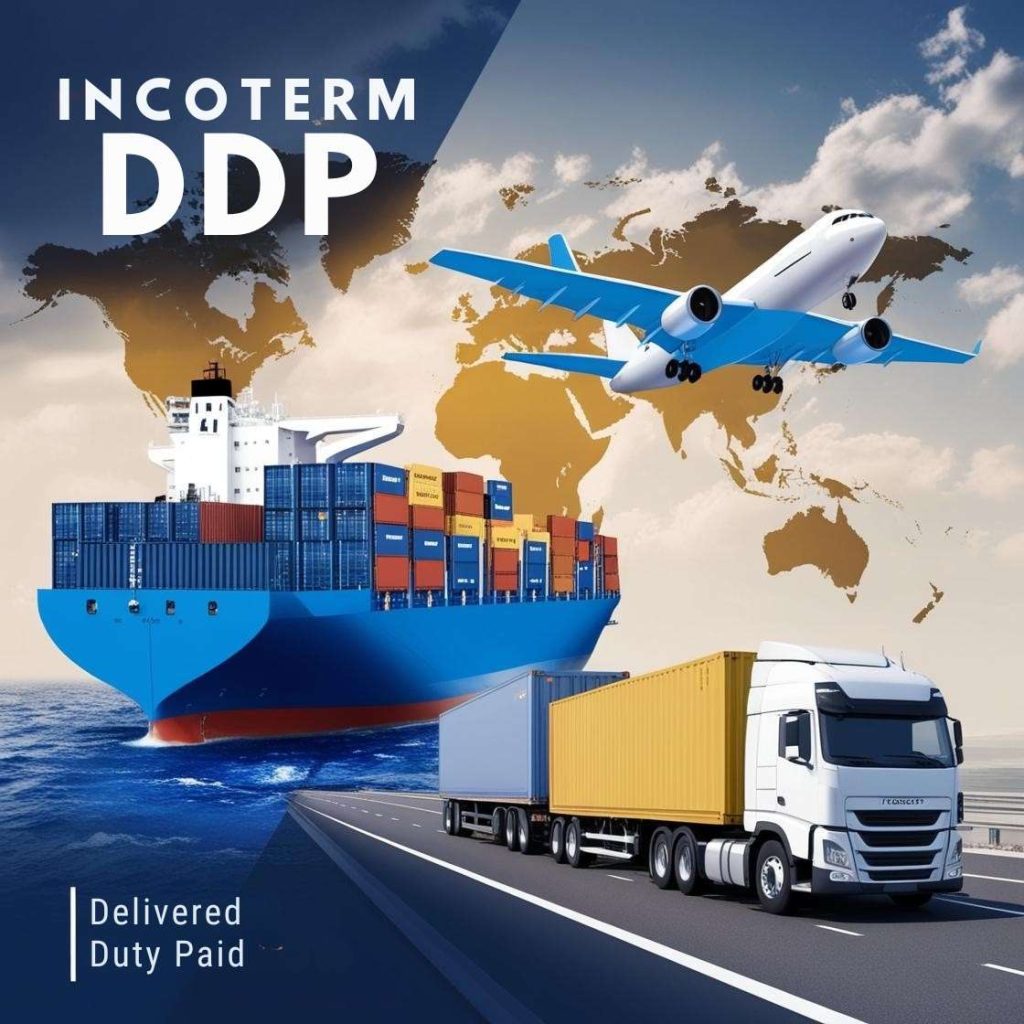
DDP shipping, or “Delivered Duty Paid,” refers to a shipping term where the seller is responsible for delivering the goods to the agreed destination in the importing country after completing import customs clearance and paying all applicable duties, taxes, and handling fees.

Under this term, the seller assumes full responsibility for all risks and costs, from transportation to import clearance at the port of destination. DDP involves the maximum level of obligation for the seller. If the exporter cannot directly or indirectly obtain the necessary import licenses, DDP should be avoided to prevent legal or financial risk.

Key Differences Between DDP and DDU

The fundamental difference between DDP and DDU lies in who takes responsibility for import customs clearance and duties at the destination.

CriteriaDDP (Delivered Duty Paid)DDU (Delivered Duty Unpaid)
Import clearanceSeller handlesBuyer handles
Import duties & taxesPaid by sellerPaid by buyer
Risk transferUntil delivery to buyerUntil goods arrive; buyer responsible post-arrival
Best forSellers capable of import clearanceSellers without clearance capabilities or unwilling to handle destination risks

Exporters with the ability to handle destination customs procedures may choose DDP. Otherwise, DDU is the safer option to avoid bearing unfamiliar or unpredictable costs.

How to Calculate DDP and DDU Costs

Here’s a breakdown of how costs are calculated under each shipping term:

  1. FOB Price (Free On Board)
  2. Add export local charges (origin port fees)
  3. Add freight cost (positive or negative) to get CIF value (Cost, Insurance, Freight)

Based on CIF:

  • For DDU shipping: Add destination local charges
  • For DDP shipping: Add destination duties, VAT, and customs clearance fees

Properly estimating all costs ensures both parties understand the financial responsibilities involved.

Difference Between DAP and DDU

DAP (Delivered at Place) is a newer Incoterm introduced in the Incoterms 2010 rules, which replaced the older DDU shipping term from the 2000 version.

Under DAP, the seller delivers goods to a specified place in the destination country, ready for unloading. The seller bears all risks and costs involved in delivering the goods to this point, but import customs clearance and taxes remain the buyer’s responsibility—similar to DDU, but with updated legal framing.

DDP or DDU?

Which mode of transportation should you choose? Have a free consultation and consolidated shipping.

Summary of DAP Seller and Buyer Responsibilities

Seller Obligations (A1–A10):

  • Provide goods and documents according to the contract (A1)
  • Obtain export licenses and handle export formalities (A2)
  • Arrange transportation to the specified place (A3)
  • No obligation to insure goods, but must provide info if requested (A3-b)
  • Deliver goods ready for unloading (A4)
  • Assume risk until delivery (A5)
  • Pay all costs related to export, transportation, and handling (A6)
  • Notify buyer to prepare for delivery (A7)
  • Provide delivery documentation (A8)
  • Pay for inspection, packaging, and labeling (A9)
  • Cooperate in providing import documentation if needed (A10)

Buyer Obligations (B1–B10):

  • Pay for the goods as agreed (B1)
  • Handle import formalities and obtain licenses (B2)
  • No obligation to arrange transport or insurance (B3)
  • Take delivery when goods are presented (B4)
  • Assume risk from the point of delivery (B5)
  • Cover costs from delivery onward (B6)
  • Provide necessary notifications to the seller (B7)
  • Accept and use delivery documentation (B8)
  • Pay for any import inspection (B9)
  • Cover the costs of obtaining any additional import documents (B10)

Final Thoughts: Choosing the Right Shipping Term

Choosing the right international shipping term—whether DDP, DDU, or DAP—can significantly impact your logistics cost structure and risk profile. Exporters must evaluate their ability to manage customs clearance at the destination, assess buyer expectations, and understand the legal and tax environment of the importing country.

By clearly defining each party’s responsibility in the sales contract and selecting the most appropriate term based on practical capacity, exporters can minimize delays, reduce disputes, and improve trade efficiency.